Snap’s new Spectacles let you see the world in augmented reality
Snap’s new Spectacles glasses are its most ambitious yet. But there’s a big catch: you can’t buy them.
The new Spectacles have dual waveguide displays capable of superimposing AR effects made with Snapchat’s software tools. The frame features four built-in microphones, two stereo speakers, and a built-in touchpad. Front-facing cameras help the glasses detect objects and surfaces you’re looking at so that graphics more naturally interact with the world around you.
Unlike past models, Snap isn’t selling them. Instead, it’s giving them directly to an undisclosed number of AR effects creators through an application program online. (Another indication they aren’t ready for everyday use: the battery only lasts 30 minutes.)
Like the bright yellow vending machines Snap used to sell the first version of Spectacles several years ago, the approach could end up being a clever way to build buzz for the glasses ahead of their wide release. Spiegel has said that AR glasses will take roughly a decade to reach mainstream adoption.
The new fourth generation of Spectacles come from a secretive hardware division of the company called Snap Lab, which is also working on a camera drone. They weigh 134 grams, more than double the weight of the previous version but far less than Microsoft’s Hololens AR headset. They’re designed to be worn indoors or outdoors with up to 2,000 nits of display brightness, a tradeoff the company clearly made to favor display richness at the expense of battery life.
A new feature, called Connected Lenses, allows multiple people to see and interact with the same scene in AR. Snap is also launching an AR “innovation lab” called Ghost and is committing $3.5 million to support creators making effects, with another $1 million in funding with Verizon to fund AR experiences used over 5G.
See the full story here: https://www.theverge.com/2021/5/20/22445481/snap-spectacles-ar-augmented-reality-announced

Self-portraits by robot artist go on display at the Design Museum
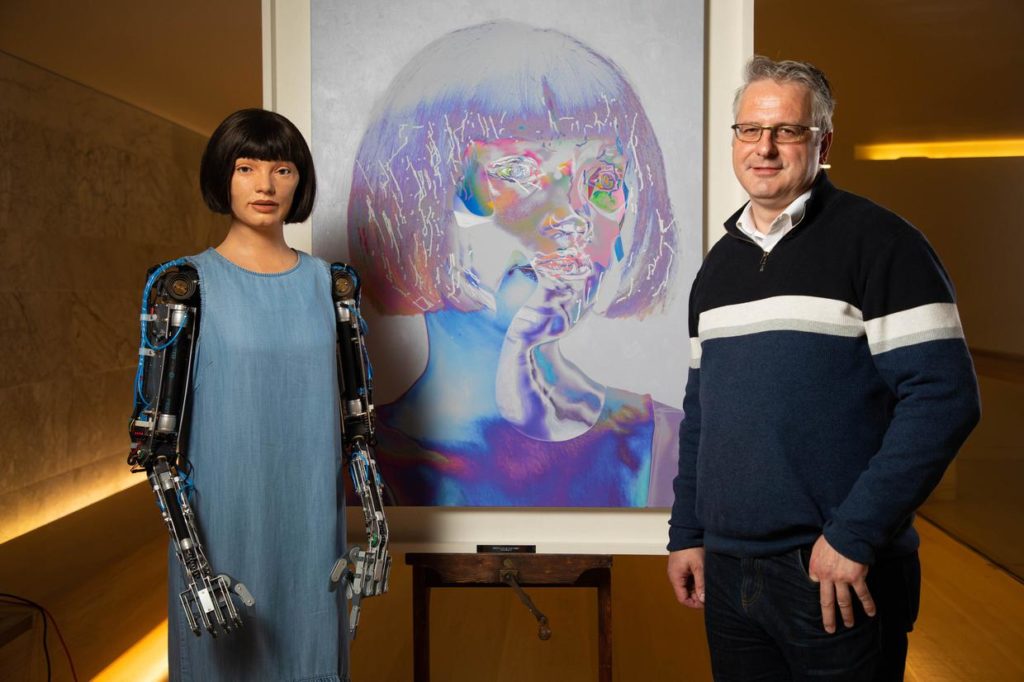
Self-portraits by a robot artist have gone on display at the Design Museum.
The life-size “ultra-realistic” android, named Ai-Da following its creation in 2019, is the first of its kind in the world, according to the London museum.
The robot creates large-scale self-portraits and “uses AI algorithms to produce works that comment on the current and future uses of artificial intelligence”, it added.
See the full story here: https://www.independent.ie/entertainment/self-portraits-by-robot-artist-go-on-display-at-the-design-museum-40441963.html
Everything Google announced at I/O today
Android 12, 3D video calls, Wear OS updates, dev tools and more
...
AI conversations get more conversational with LaMDA
It’s a little too easy to stump AIs if you go off script, asking something in a way that to you seems normal but to the language model is totally incomprehensible. Google’s LaMDA is a new natural language processing technique that makes conversations with AI models more resilient to unusual or unexpected queries, making it more like a real person and less like a voice interface for a search function. They demonstrated it by showing conversations with anthropomorphized versions of Pluto and a paper airplane. And yes, it was exactly as weird as it sounds.
Google built a futuristic 3D video calling booth
...
(Indian actress deepfakes herself into a role) Make way, Rakhi Sawant is now eyeing Hollywood!
Actress-dancer Rakhi Sawant never fails to keep us hooked to her antics, be it on a reality show or in real life.In a quirky video posted on social media, she gave a glimpse into what would be her Hollywood look.Deepfaking her own face in a Hollywood movie, the 42-year-old presented an eerie gift to her fans on Saturday.Let's check it out!
See the full story here: https://www.newsbytesapp.com/news/entertainment/rakhi-sawant-deepfakes-her-face-in-hollywood-movies/story

ETC Executive Coffee: Verizon on the Future of Entertainment
To kick off ETC@USC’s five-part Spring 2021 Executive Coffee with… series, Serhad Doken, executive, innovation and product realization at Verizon, led a Zoom discussion on March 15. “Expectations for the Future of Entertainment and UI/UX design” was the framing question for a wide-ranging discussion. Six students from USC’s School of Cinematic Arts, Viterbi School of Engineering, and the Iovine and Young Academy participated. Topics included user experience expectations, VR and 5G, “gaming” the algorithm, recommendations versus serendipity, artists earning a living, and what experiences have yet to be adopted.
See the full story and 9 minute highlight reel here: https://www.etcentric.org/etc-executive-coffee-verizon-on-the-future-of-entertainment/

Facebook aims to help AI models forget with Expire-Span
By forgetting, AI will be able to retain more information at scale because it will be able to memorize the most critical items.
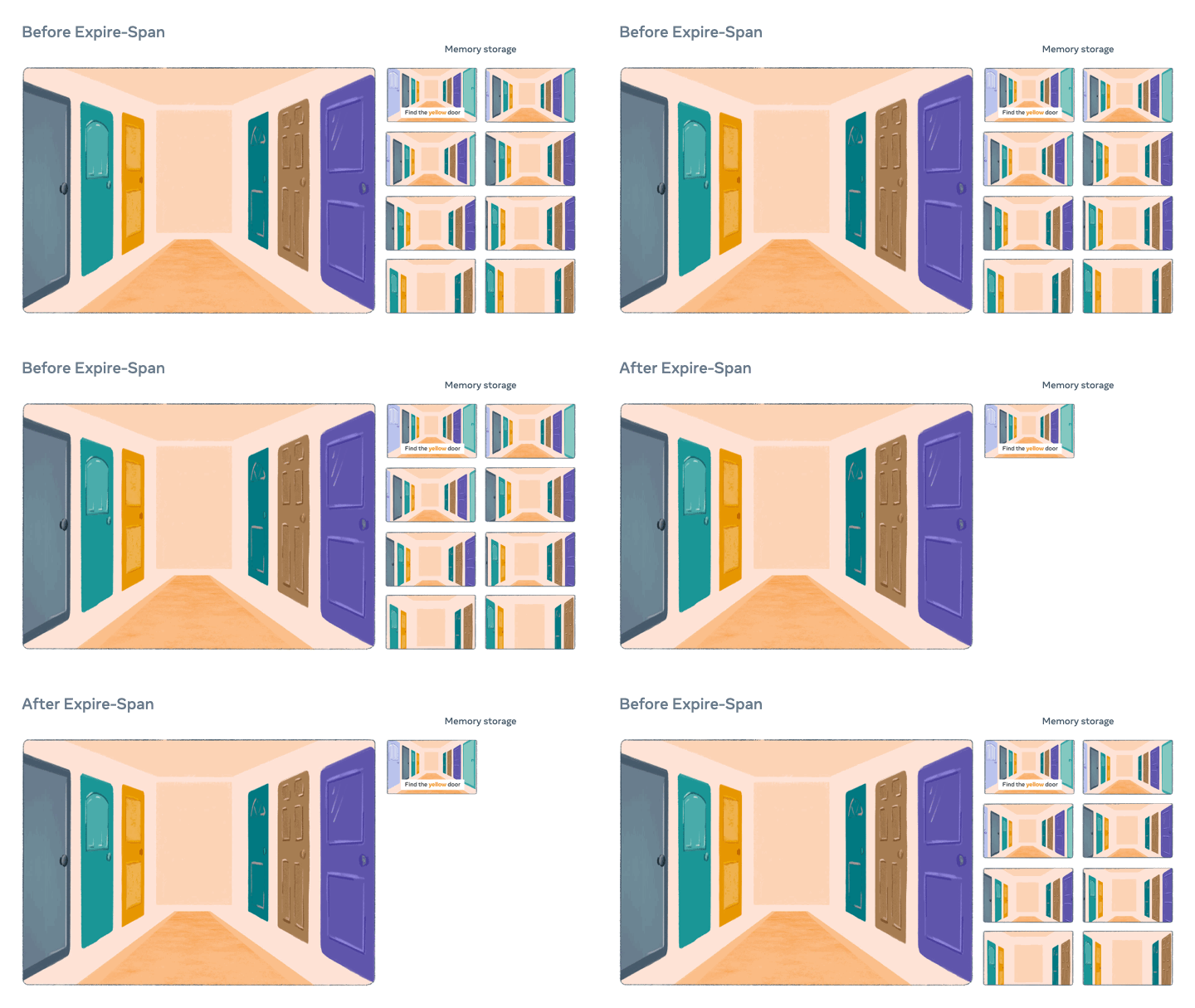
The company introduced a tool called Expire-Span, which enables AI models, to forget. Today, AI models including neural networks memorize information and data without distinction. By forgetting, AI will be able to retain more information at scale because it will be able to memorize the most critical items.
Expire-Span evaluates each piece of information in a model and predicts what will be more important to return. The training data is based on context as the model learns.
In a blog post, Facebook explained that processing information indiscriminately can work on a small scale. But once models take on more data the computational costs surge.
Aside from the computation and storage savings, Expire-Scan processes can enable models to optimize over time.
Facebook said Expire-Scan was inspired by the way humans retain memories.
See the full story here: https://www.zdnet.com/article/facebook-aims-to-help-ai-models-forget-with-expire-span/
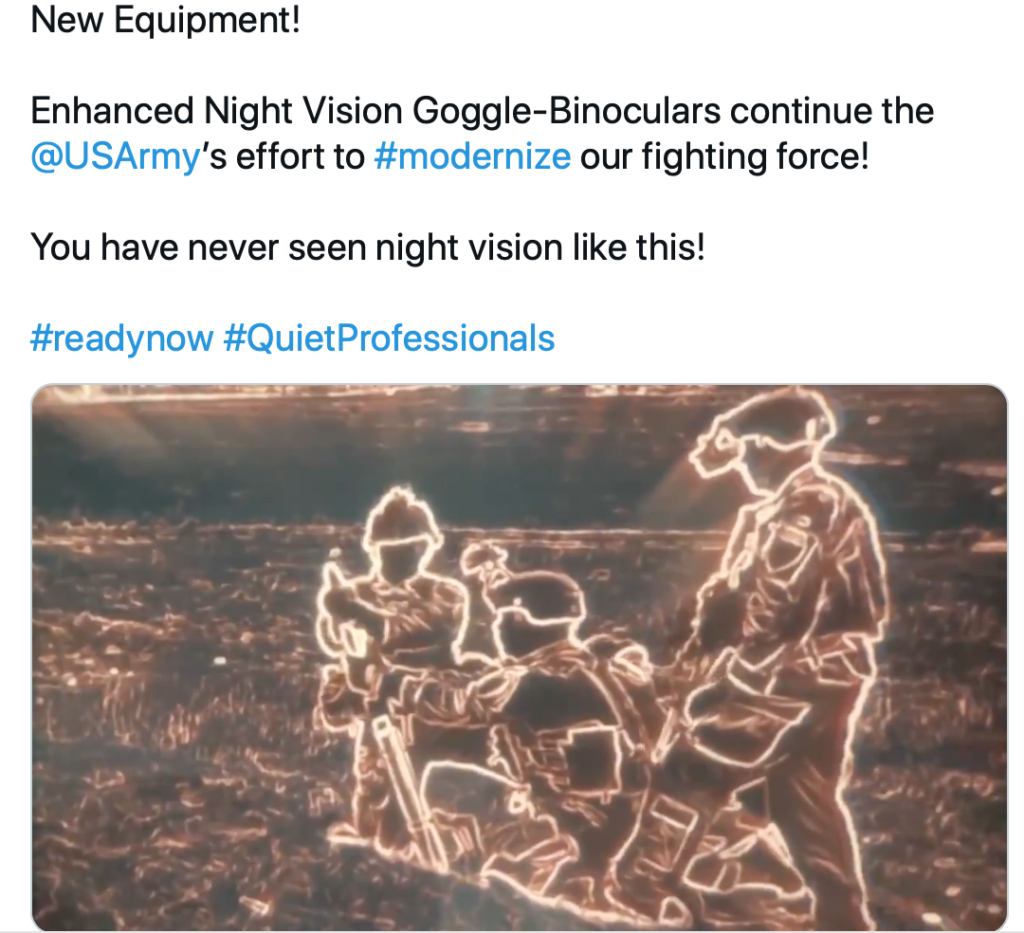
U.S. Army Unveils Enhanced Night Vision Tech With Higher Resolution, Augmented Reality
This new technology combines a night vision binocular (which has more features than a goggle) with a clip-on thermal imager, as well as augmented reality technology. That means they can improve sight in the day, detect targets in very low light, bad weather and even through smoke.
See the full story here: https://www.newsweek.com/us-army-unveils-enhanced-night-vision-tech-higher-resolution-augmented-reality-1591395
Oscars, Golden Globes drive streaming activity amid controversy
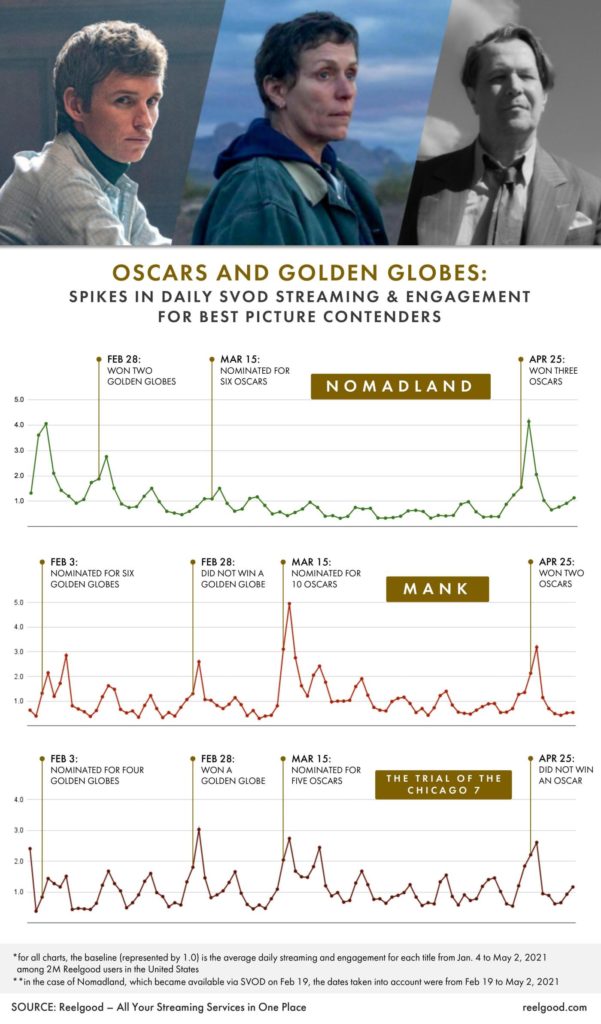
Reelgood found that Nomadland, having won the most Oscars this year (and all the PR that comes with that achievement) saw 4.1x more streams the day after director Chloé Zhao and actress/producer Frances McDormand’s historic Oscar wins.
Mank, meanwhile, enjoyed a much stronger boost in viewing after news of its 10 Oscar nominations broke compared to when it actually won two of those noms.
For TV, the team looked at the lift for shows that were not as popular as the biggest nominated series such as Schitt’s Creek, The Queen’s Gambit, and The Crown.
See the full story here: https://blog.reelgood.com/oscars-golden-globes-streaming-controversy?mkt_tok=ODUwLVRBQS01MTEAAAF9Cc1JWbhNcnkutGXXU0v8liHeG4l3BHatz11COhiGHF-vP1vC_Dt6uEwt_Rmlucwd6ng61wy0eutkzf-dmWyHDqPMKfKVa728YypT0pippM7c