The Centers for Disease Control and Prevention (CDC) in the US has announced that it intends to award a sole source fixed-price purchase order to Georgia State University, in order to offer more robust and realistic VR training solutions on laboratory safety, quality, and preparedness topics.
The CDC’s main objective is to improve laboratory safety training by being able to better evaluate user progress, responses, and evaluations. The CDC states that the project will be able to immerse users in environments that include 3D characters created from images of real people. These characters will be able to train laboratorians to identify user-based issues and problems, thereby training them to prevent costly and dangerous lapses in protocols, procedures, and activities.
3D volumetric video capability is a necessary component of the CDC’s requirement, which requires a HOLOSYS system for creation and/or development. By using this system, the CDC states that it will be able to investigate the creation and use of volumetric video capture within VR training courses.
Astronauts have used VR tools before; NASA astronauts commonly use such tech to prep for spacewalks, for example. But the Starliner training will break new ground in its extensive use of VR gear, which will help prep astronauts for every aspect of their mission, from liftoff to landing, Boeing representatives said.
Varjo, for its part, will apply the lessons learned from the Starliner work to other aspects of its business, such as pilot training, Eiden said. But the company is also getting something else out of the newly announced partnership.
I am seeing people move meetings to campaign-mode video games for a change of scenery, blending engaging interaction with work. There’s a lot of room for creativity and no need for absolute conformity any more—in fact, thinking of new ways to interact shows respect and empathy for what employees are managing in their lives, both for themselves and on behalf of the organizations we’re running. - Frank Speiser, Talla
3. Virtual Work Meetings
Forget Zoom meetings with your co-workers squished into tiny corners of your screen—soon we’ll be meeting in virtual environments. Taking remote working into VR spaces will let us manipulate objects collaboratively, break off into sidebar conversations by “walking” away and have more natural professional relationships. Gossip around a virtual water-cooler? It’ll happen sooner than you think. - Chris Turlica, MaintainX Inc.
5. Group Socialization
I think that we need a platform to let individuals mimic the hallway conversations that happen in large conferences. The platform should be agnostic to the event and let people find others and be found, have side chats and schedule follow-up meetings. It should be API-powered to all event platforms and highly customizable in terms of how much information you want to share with others. - Marcelo De Santis, ThoughtWorks
12. Employee Onboarding
Major retailers, sports teams and tech companies are using technologies like Strivr to train employees for operational efficiency, customer service and more. With more people working remotely, the employee onboarding experience is changing. VR can engage employees remotely and provide opportunities for consistent delivery of information from anywhere. - Ryan Chan, UpKeep Maintenance Management
15. Job Interviews
People often think that if we have a face-to-face interview we can hire better. That’s going to change, and virtual interviewing will be a lifestyle change businesses and candidates will have to adapt to. When we can work virtually, why can’t we hire virtually? It’s all about trust, and trust is a seed that needs to be planted before you see the flower bloom. - Bhavna Juneja, Infinity, a Stamford Technology Company
Something that may seem odd, is that Sophia is rarely discussed in serious AI debates, even while she is busy scheduling public appearances, and being showcased at blockchain conferences. To understand the reasoning behind this, an exploration of the history of its two eccentric representatives needs to be undertaken.
Who is David Hanson?
David fully understands the importance of having a humanoid robot that has an appearance that is both non-threatening, and welcoming. Credit should absolutely be given to David for creating a robotic humanoid that has been able to capture the human imagination with very limited and scripted interactions with humans.
Who is Ben Goertzel?
Ben Goertzel is the chief scientist and chairman of AI software company Novamente LLC; chairman of the OpenCog Foundation; and advisor to Singularity University. Ben is also the Chief Scientist of Hanson Robotics, the company that created Sophia.
Herein is why Ben Goertzel is often speaking at cryptocurrency and blockchain events. The AGI token was the fundraise for SingularityNET, and the association to Sophia is quite simple. Sophia is shown at these events to keep investors interested in the project.
Is Sophia Scripted?
There is also a lack of input technology. When it comes to building an AGI there is common consensus that input devices are important to form an emergent consciousness. A notion of “self,” is needed as related knowledge and functions are developed gradually according to the system’s experience. Based on Sophia’s lack of mobility and input mechanisms this seems to be something that is ignored. Her only input seems to be auditory, with possibly some type of basic computer vision.
There is also the problem that all of her conversations are pre-scripted. If you want to book Sophia for an event, you need to send five questions which need to be pre-approved by the organizers. The questions need to be asked in a specific order. This signifies that based on the preset questions, Sophia is simply parroting pre-canned responses. This is why the answers she gives are always so interesting, they are designed to evoke emotion in the audience, and the answers are delivered by a human using Sophia as a channel.
It’s an interesting social experiment to understand how humans communicate and interact with humanoid robots, but at no time is there any indication that Sophia could even be remotely considered intelligent or self-aware.
It is due to the above that Sophia continues to be adopted by a mainstream audience that may be deceived in believing that Sophia is more intelligent than she actually is. Meanwhile, she is completely ignored by the AI community that understands that the current state of AI is far more advanced than what Sophia is capable of illustrating. At the very least this highlights that the AI community needs to do a better job of communicating the advancements and progress that are being made every day in AI systems, even if those are simply forms of Narrow AI (also known as Weak AI), and not true AGI.
What was supposed to be a cinema and media studies course to create virtual reality films on the Philadelphia Museum of Art collections became individual films by the students about the realities and connections to the pieces they researched.
Instead of creating a virtual reality film about the Japanese teahouse in the Philadelphia Museum of Art (PMA) for her cinema and media studies class, Penn student Jean Chapirocreated a tea ceremony in her own house in Mexico City and a documentary film about what she was experiencing during the pandemic.
The teaching team had to recast the experience, taking into account the course goals, curriculum, syllabus, work that had already been completed, and what the students could reasonably accomplish from home.
“We turned the assignment inward to create a work of personal expression. Before the shutdown, we focused more on the VR aspect of the projects, showing place or context. After moving online, the context became their own individuality and what that object means to them,” Schwartz says. “I’m amazed at what they did—very powerful stuff.”
Nielsen Global Connect today launched a suite of virtual and augmented reality Smart solutions that includes Nielsen SmartStore for in-store testing, Nielsen SmartShelf for shelf and planogram testing, and Nielsen SmartShopper to uncover in-store shopping behaviors.
SmartStore allows users to create and test customized, in-store shopping simulations and scenarios within a dynamic, 3D, 360-degree total store environment, multiple shelf layouts and locations, point-of-sale (POS) designs, promotion displays, packaging options, and even whole store designs. It provides a read on shopper head, eye, and foot movements and a 3D heat map of the store, shelf, or aisle. A playback function allows users to review the in-store shopper journey and tag possible problem moments. Within the playback function, researchers can also ask test shoppers qualifying questions about why they chose or reacted in a certain manner at the shelf.
Nielsen SmartShelf allows companies to design and test aisle, category, and shelf scenarios using passive data and active survey insights.
The latest edition of SmartShopper, which will be available in July, will enable companies to identify and uncover in-store shopper behaviors. Fueled by the latest in augmented reality, this smartphone-enabled, shopper marketing tool allows for product images, in-store marketing artwork, and seasonal or special-event concepts to be tested by shoppers in-store using interactive gaming technology.
Getting milked, it turns out, also leads a cow to feel stress. Things like the manner in which they are milked, be it with a machine or by hand, can play a role in their stress levels.
Like numerous farmers before him, Akgül unwittingly discovered one of the most simple and low-cost ways to increase milk production in a herd. Playing music makes cows relax. And the more calm a cow is, the more milk they’ll give up.
Knowing that classical music can help is a start, but are there other kinds of music that can also produce similar results?
Their results revealed that when slow music was played, the cows had the highest yield, producing approximately 3% more milk than when they listened to fast music or no music at all.
The Leicester study also identified specific songs that the cows either jived with or didn’t. Jams like “Everybody Hurts” by R.E.M., “Bridge Over Troubled Water” by Simon & Garfunkel, and “What A Difference A Day Makes” by Aretha Franklin were top on the list of songs that effectively helped cows reduce their stress levels and thus produce more milk.
One of the newest techniques for increasing milk production is the use of virtual reality (or VR) headsets on cows in Russia. According to VICE, the new program, by the Ministry of Agriculture and Food of the Moscow Region, operates pretty much exactly as it sounds.
By transporting cows to peaceful places, farmers are hoping they’ve found yet another means of tricking their herds into producing more milk.
Wave partners with music labels, management companies, and independent artists to help host virtual concerts with digital fan avatars.
Wave plans to use the funding to roll out new in-stream experiences and expand into Japan, China, and other countries. The company has put on more than 50 events, with some hosting up to 400,000 people at a time.
MPEG passed away on 2020/06/02T16:30 CEST. The agony was long, but the result was predictable. The causes have partly to do with the nature of ISO whose main feature I describe in This is ISO – A feudal organisation.
I need to make 3 strong statements:
Those who have created a new intellectual object have to right to exploit it
Technology innovation is well rewarded by a system that identifies, determines and protects intellectual property (IP)
Those who make available their IP to a technical specification declared standard by an official standards body have additional benefits compared to those who do not. They should have more obligations as well.
The competitors
When the MPEG-4 Visual licence sentenced the death penalty to the MPEG-4 Visual standard, competitors popped up. Four famous names are Real Networks, Microsoft, On 2 and Google. The fact that private companies could assemble a video codec of commercial value signaled that video coding was a maturing technology and that “anybody” could assemble a reasonably performing solution.
What the market offers
The market has not been idle. In 2015 an initial group of companies (Amazon, Cisco, Google, Intel, Microsoft, Mozilla, Netflix) have created Alliance for Open Media (AOM), initially targeting video. The AOM about page mentions 4 main features of the first specification AV1:
Royalty-free ecosystem
Patent review process and legal defense fund
Cutting edge technologies
Collaborative open source development.
... Most importantly, the market has come up with a solution – AV1 by the Alliance for Open Media – that is capable to provide decently performing specifications that are royalty free and promises a defence to an attacked member (with strings attached, but everybody looks at the next quarter, and does not consider the implications of a choice 5 years from now).
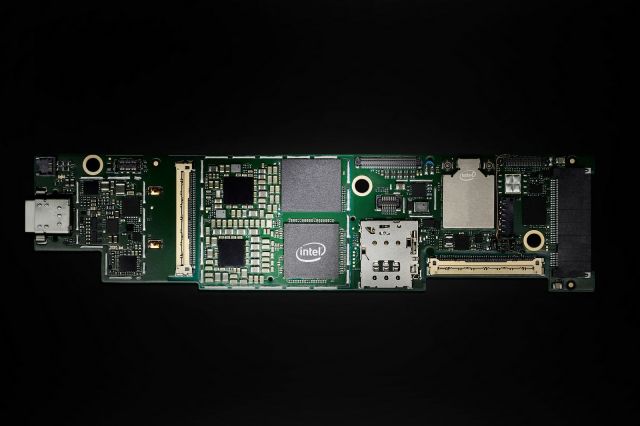
Intel's mobile client platform, code-named “Lakefield,” introduces the industry’s first product with 3D stacking and hybrid computing architecture. Leveraging Intel’s latest 10nm process and Foveros advanced packaging technology, Lakefield offers OEMs more flexibility for thin-and-light form factor PCs. (Credit: Intel Corporation)
Intel is able to combine multiple chip architectures and onboard memory onto a single processor thanks to its Foveros 3D packaging technology. That allows the company to stack multiple logic and memory dies on top of each other, instead of spreading them out on a flat 2D plane like traditional processors. The basic takeaway is that Lakefield chips also won't need to take up much physical space, making them ideal for very thin devices.
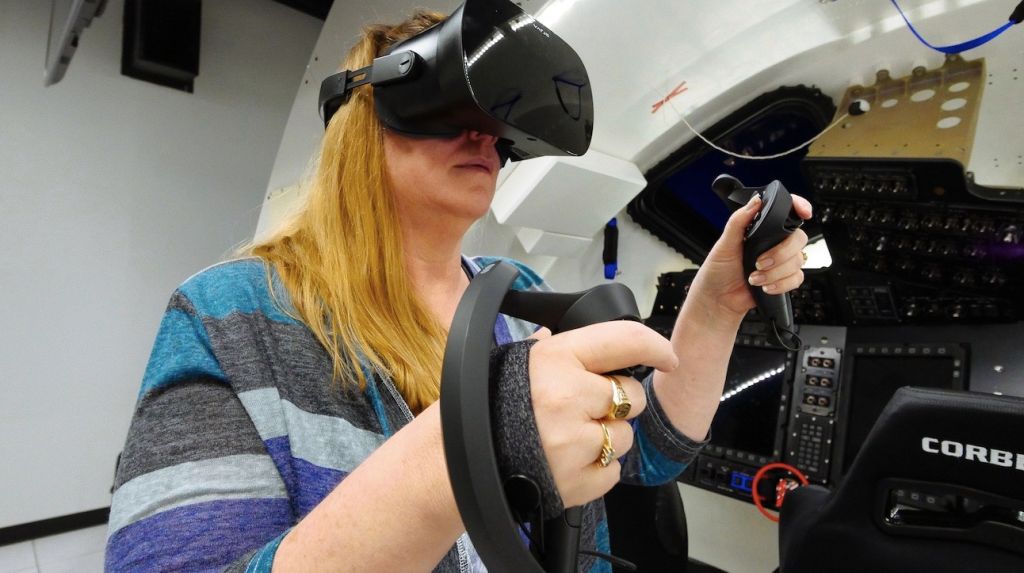 Astronauts have used VR tools before; NASA astronauts commonly use such tech to prep for spacewalks, for example. But the Starliner training will break new ground in its extensive use of VR gear, which will help prep astronauts for every aspect of their mission, from liftoff to landing, Boeing representatives said.
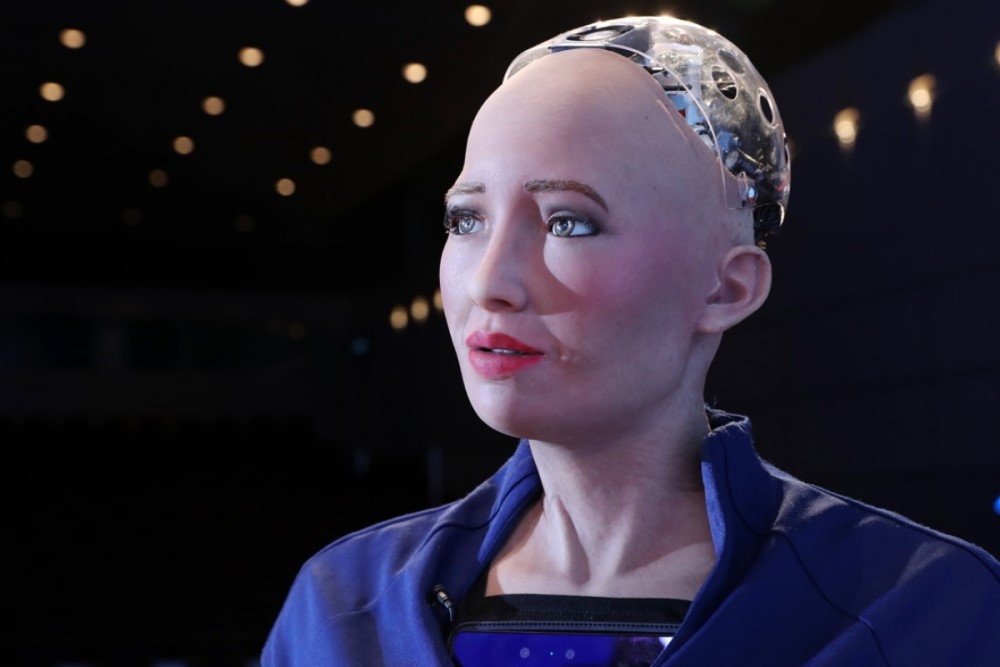 Something that may seem odd, is that Sophia is rarely discussed in serious AI debates, even while she is busy scheduling public appearances, and being showcased at blockchain conferences. To understand the reasoning behind this, an exploration of the history of its two eccentric representatives needs to be undertaken.
 Wave partners with music labels, management companies, and independent artists to help host virtual concerts with digital fan avatars.