10 innovative tech startups from Warsaw you should know about in 2020
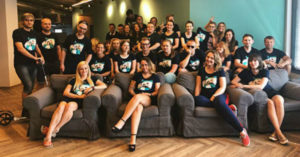 Brand24

Founders: Michał Sadowski
Funding: €540k
Founded year: 2010
Why its hot: Brand24 is an award-winning app, which lets you track and engage people talking about your company. Several brands of all sizes such as H&M, IKEA, Intel, etc. use Brand24 to identify and analyse online conversations about their products, brands, and competitors. The company provides an easy-to-use, affordable, and reliable solution letting you track and engage online conversations about your business.
Hotailors
Founders: Filip Maksymilian Bloch, Maciej Stopierzyński, Michał Szeksztełło
Founded year: 2016
Why its hot: Hotailors is a platform for organising business travels that grant access to the best real-time offers from over 2.000.000 hotels and over 700 airlines across the world. With the next-generation AI-powered travel tech platform, you can organise your corporate travel faster and better at a lower cost. With its integrations and real-time analytics, you can easily control your travel policy, minimise spendings and increase the efficiency of your business.
InteliWISE
Founders: Marcin Strzalkowski
Funding: €1.8 million
Founded year: 2006
Why its hot: InteliWISE is a Conversational AI company that enables the digital transformation of customer service and engagement. It provides intelligence, AI-powered and industry-leading cloud-based services. The company’s solutions are used for both live-assisted and automated customer engagement and e-commerce applications.
See the full story here: https://siliconcanals.com/news/10-innovative-tech-startups-warsaw-in-2020/
OVR Technology Is Creating Olfactory Virtual Reality for Health Care, Education and Training
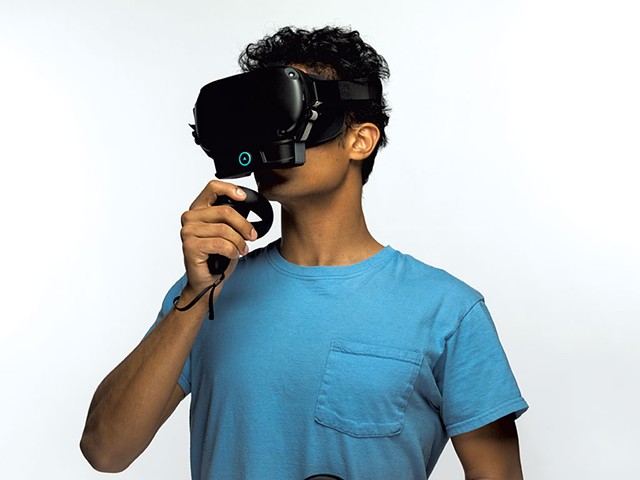 The company aims to improve health care, education and training, and its first product is a three-component platform called Architecture of Scent. One component is the small ION device, which straps onto a VR headset, close to the wearer's nose. ION contains the second component, nine cartridges that store and emit highly realistic scents created by the company, or "scentware." The third component is software that interacts with VR software to cue delivery of scents in precisely measured doses timed to correspond to the headset wearer's behavior.
The scent of a rose should "be more intense the closer you get to it," Stein said. "Or, if there's a wind blowing" in the VR environment, the software calibrates "how the wind carries that scent."
A key collaborator who has helped guide development of the Architecture of Scent is Albert "Skip" Rizzo, a research professor at the University of Southern California and director for medical virtual reality at USC's Institute for Creative Technologies.
See the full story here: https://www.sevendaysvt.com/vermont/ovr-technology-is-creating-olfactory-virtual-reality-for-health-care-education-and-training/Content?oid=29413819
Here’s The Good News About Virtual Reality
 Boneworks and Superhot VR
Boneworks, the experimental physics VR adventure which launched just before the holiday season, reached 100,000 players in its first week. This equates to an estimated $3 million in revenue. To put this into perspective, Beat Saber made $2 million in revenue in its first month. In addition, Boneworks was only released on Steam, making those figures even more impressive!
Superhot VR, one of the most popular VR games out there, also saw great success over the holiday period. The company announced the game grossed $2 million across all platforms in the week over Christmas. This roughly equates to 80,000 copies of the game being purchased across PSVR and Oculus platforms in seven days.
Oculus Quest
Since its release in 2019, Oculus Quest has seen steady sales and helped to thrust VR into the mainstream. Oculus Quest is Facebook’s first all-in-one headset that offers six degrees of freedom (6DoF) tracking.
The Quest was such a hot item over the holidays, the device sold out pre-Christmas and we saw the resale price of the headset going up to 157% of the retail price.
Valve Index And Half-Life
Valve’s flagship Half-Life: Alyx VR game garnered a lot of positive media attention at the end of 2019. With more than 10 million views of the traileracross YouTube and Twitter in its first 24 hours, widespread media coverage, and tens of thousands of social media comments, it was impossible to ignore the news.
The announcement of the game has resulted in the Valve Index VR headset selling out across all 31 regions where sold.
See the full story here: https://www.forbes.com/sites/solrogers/2020/01/15/heres-the-good-news-about-virtual-reality/#7534bfed3196
Apple’s Reality Converter simplifies creating 3D augmented reality objects
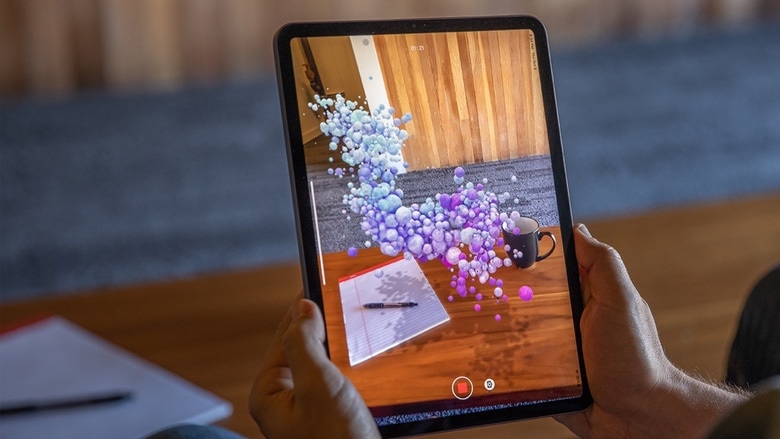 Apple’s Reality Converter gives developers a free tool to convert, view, and customize 3D objects into USDZ, the file format Apple uses for augmented reality content. This is clearly part of the company’s drive to play a significant role in AR development.
Play around with reality in Apple’s Reality Converter
Reality Converter, Apple’s new AR tool for macOS, lets users drag-and-drop common 3D file formats, such as .obj, .gltf and .usd, to view the converted USDZ result. Users can then change textures and edit file metadata.
Once finished, Reality Converter can preview the USDZ object under a variety of lighting and environment conditions with built-in IBL (image-based lighting) options.
The first Reality Converter beta is available now on Apple’s website for developers. Being a registered developer is required to access this software. It’s Mac-only — there’s no iPad version.
See the full story here: https://www.cultofmac.com/677309/apple-reality-converter-tool-3d-augmented-reality-objects/
How Augmented Reality Can Be Used for Writing Prompts
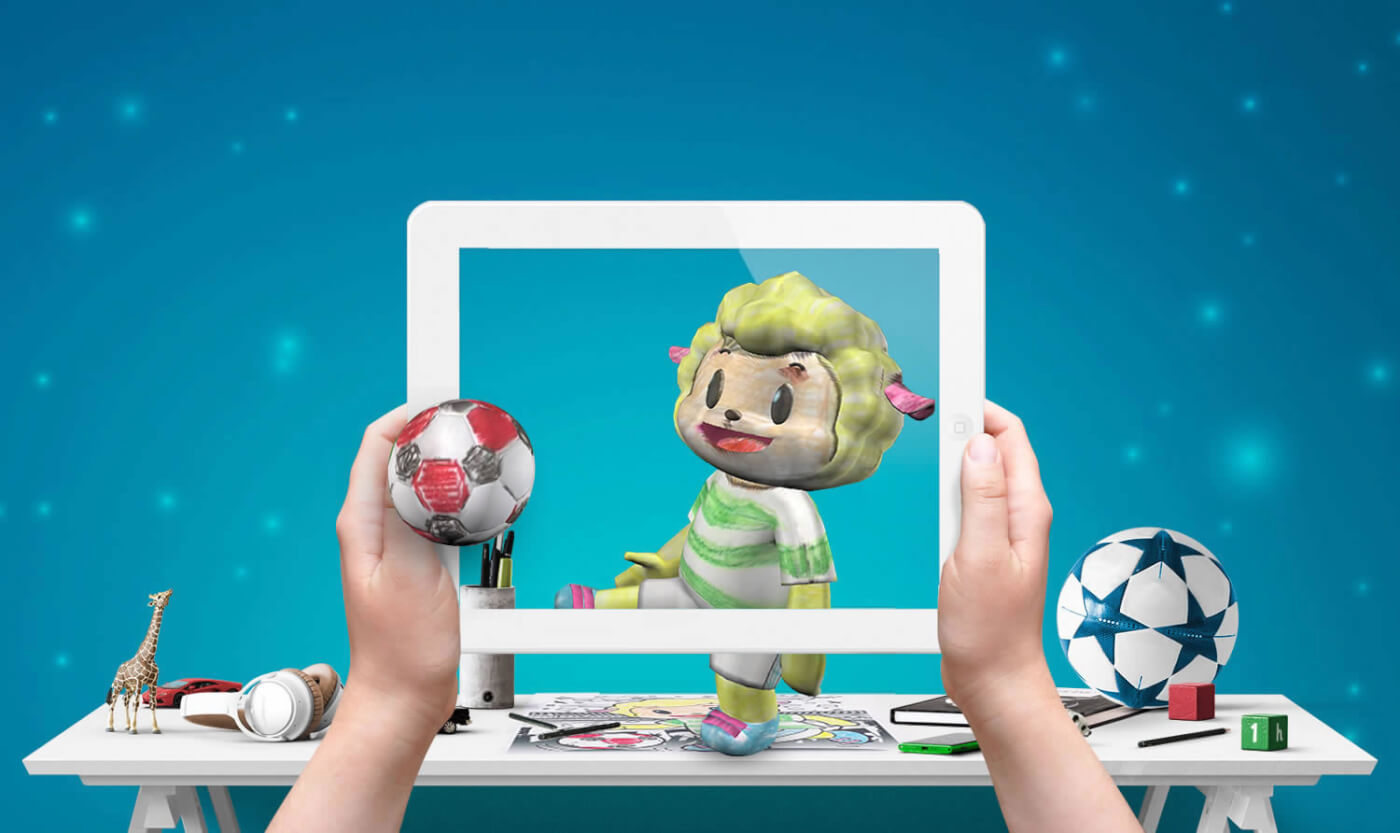 For young learners, the ability to have discussions based around the AR interaction is a powerful imagination trigger. It also prompts writing based on the inspiration those interactions produce. In terms of language analysis, the adjectives that can be used to describe a scene become more abundant once the scene becomes a moving, interactive one, and the prompts triggered by that scenario are almost limitless.
From the perspective of a character, in particular, the options are incredible.
“The learner starts with the character, and from here the character can, almost literally, be brought to life, triggering any number of associated questions and interactions which inspire added creativity in terms of writing about that character,” says Miread Shaw, an editor.
What AR Means to the Classroom
The possibilities in terms of what AR-assisted learning can bring to the classroom are breathtaking, but as with any new technology, it must be incorporated in the right way. Using the technology as part of a greater skills-based instruction is highly recommended, and it must be clear that the imagination itself is child’s alone, and is only enhanced by these types of apps.
See the full story here: https://arpost.co/2020/01/14/how-augmented-reality-can-be-used-for-writing-prompts/
PRESS RELEASE Embodied Labs Raises $3.2 Million in Seed Funding with Diverse Investors Across Aging, Tech and Impact Funds
 California-based Embodied Labs, the leading immersive platform using virtual reality (VR) to revolutionize training for the aging care workforce, announced its seed funding of $3.2 million led by top age-tech investor, Ziegler Link·Age Fund, co-led by the leading immersive tech investor, The Venture Reality Fund, as well as SustainVC, a social impact fund in healthcare and education, WXR Fund, investing in women and the next wave of computing, and ETF@JFFLabs, a social impact fund that invests in technologies that close skill gaps and improve economic mobility.
Founded in 2016, Embodied Labs uses the immersive experience of VR to put health care professionals and family caregivers into the body and mind of those who are challenged with lifespan aging issues: cognitive decline such as Alzheimer’s, age-related vision and hearing loss, neurodegenerative disease such as Parkinson’s and Lewy body dementia, and end-of-life decisions. Its training mission is twofold: enhance person-centered care through intellectual and instinctual behavior change and help long-term care providers recruit and retain a quality caregiver workforce.
About Embodied Labs
Embodied Labs, headquartered in Los Angeles, is the leading VR immersive learning platform on aging population health issues training senior living, home care, hospice, medical and nursing schools, hospitals and employers interested in educating HR departments to better support its caregiving employees. Working collaboratively with health care, gerontology, medical and clinical scientist experts as well as seasoned Hollywood filmmakers for powerful storytelling, the Embodied Labs solution has won the National AARP Caregiving Innovation Challenge, The United Healthcare & AARP OpenIDEO Caregiving for Dementia Challenge, The US Department of Education EdSim Challenge and The GlobalXR in Education Prize Challenge funded by the Bill and Melinda Gates Foundation. Learn more: embodiedlabs.com
TikTok has become the home of modern witchcraft (yes, really)
 TikTok's algorithms make it a safe haven for those with an interest in the occult – and they're drawing more and more people into the practice
A big part of TikTok’s algorithmic advantage comes from the For You page, or #fyp. It’s the first feed you see when you open the app, and comprises of a collection of recommended videos, personalised to you. But rather than getting trapped in an echo-chamber, as you might with other platforms, TikTok’s For You page works to introduce you to new content creators that embrace new ways of thinking. “The For You page is a very important feature because it doesn’t make us live in a bubble,” Selby explains. “Even though I’m a witch I’m not only showing on other witch’s feeds, like you would on Instagram. It helps you reach people you normally wouldn’t. It’s nice to be on a platform that supports creators, and doesn’t just look at us like advertising opportunities.”
See the full story here: https://www.wired.co.uk/article/witchcraft-tiktok
Virtual reality may prevent effective formation of visual memories
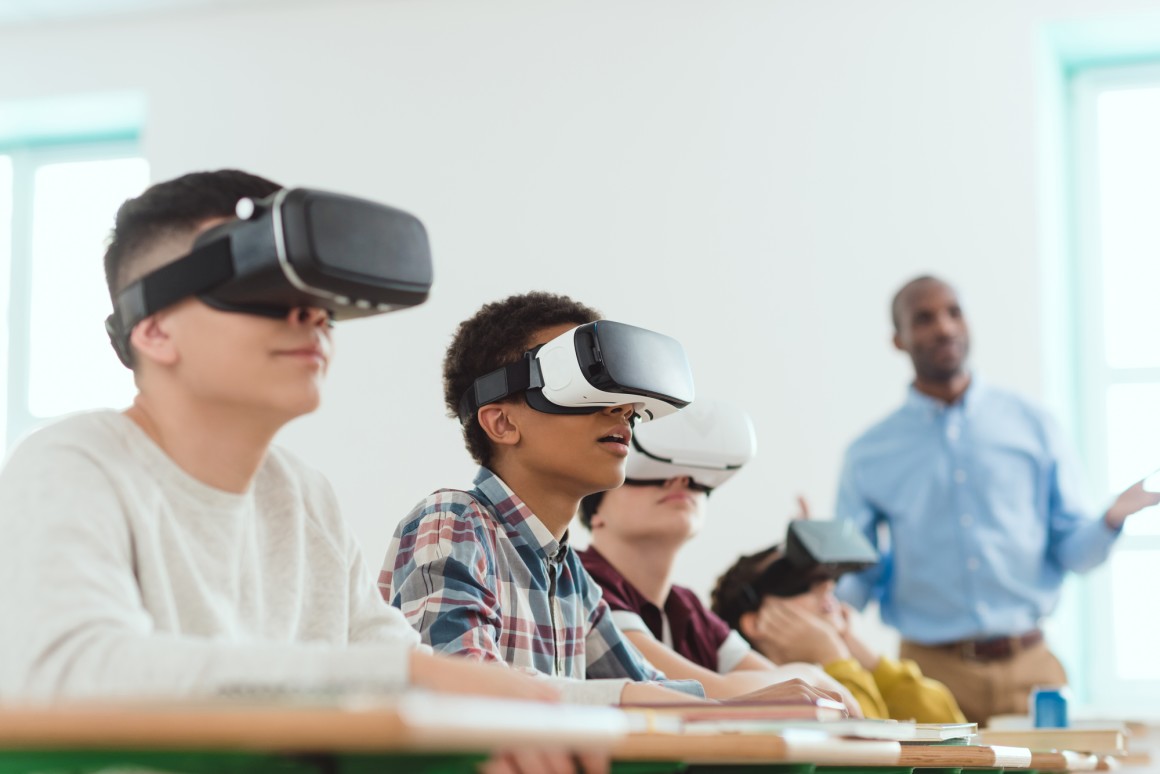 The new study specifically focused on the visual memory retention differences between active and passive VR. Active VR is when a head-mounted display (HMD) responds to subjective movements, allowing users to subjectively investigate an environment from different visual perspectives. Passive viewing, on the other hand, is when a HMD offers a single locked-off view, irrespective of a user’s head movements.
The experiment consisted of 40 subjects, split evenly between active and passive viewing conditions. Each subject watched a video set in a museum where they were presented with 10 paintings from Peter Paul Rubens, and 10 paintings from Nicolas Poussin, two well-known baroque artists. Immediately after viewing the film, and two weeks later, all subjects completed a series of memory tests.
Interestingly, while the memory test results from both active and passive groups were similar immediately following the viewing, two weeks later the results in the active group had diminished while the passive group's memories remained strong. The implication of the study is active VR viewing somewhat degrades a person’s ability to form strong visual memories.
The study did not measure how much time the active viewing subjects spent looking at the paintings.
Another hypothesis is that the enhanced immersion in active VR presents the brain with a greater cognitive load, ultimately inhibiting effective visual memory formation.
See the full story here: https://newatlas.com/vr/virtual-reality-prevent-effective-formation-visual-memories/