E3 2018 VR Guide: Every Press Conference And If VR Will Be There
Ubisoft – Monday, June 11th, 1 pm PT/4 pm ET/9 pm BST
VR Chances: Very Likely
See the full story and list of companies here: https://uploadvr.com/e3-2018-heres-every-press-conference-chances-seeing-vr/
RED Debuts Android Smartphone That Creates 4D Holograms
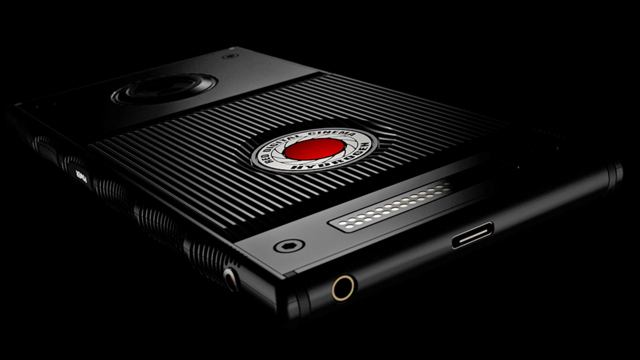 Similar to RED’s other industrial-looking products, the Hydrogen RED comes in aluminum (at $1,195) or titanium (at $1,595).
The phone’s other innovation is what RED calls “4-view,” essentially the ability to “switch the 2,560 x 1,440 screen from a standard 2D to 3D,” which RED calls its “holographic” view. The Verge reviewer called it “a big step over 3D on other phones,” with better 3D depth than he saw on previous phones. The technology behind it is “more than just combining two images to make standard 3D.”
As a phone, he concluded, “most people will be better served by getting something cheaper,” although “as a hologram making and viewing machine, it’s a solid technical improvement over what I’ve seen before.” What remains to be seen is “whether anybody really needs or wants that on a phone.”
They can manually adjust the level of 3D, “but the plug-in will also automatically create a depth of field that Leia has deemed to be the most comfortable for the largest number of players.” Developers can also provide a slider so that players can adjust the 3D settings themselves.
See the full story here: http://www.etcentric.org/red-debuts-android-smartphone-that-creates-4d-holograms/
Google, Publishers to Meet as Europe’s Data Law Takes Effect
 Sources say that Google has agreed to discuss the concerns of publishers at four of its global offices on the eve of Europe’s General Data Protection Regulation (GDPR) going into effect May 25. Google has told publishers using its advertising tools that they will be responsible for obtaining user consent to gather personal information from European users. Google has not adopted an industry-wide framework that many publishers plan to use to gain user permission on behalf of their advertising technology partners.
Of greatest concern is Google’s push to make publishers so-called co-controllers, which means the onus will be on them to determine “the purposes and means for processing of personal data,” and “ensure its processors’ contracts are in compliance.” The processor is “a third party vendor that digests data on behalf of the behalf of the controller and keeps records of personal data and processing activities.”
Thus, say publishers, although Google would require publishers to obtain consent for “processing of personal data on its behalf,” Google “would decide how and when that data would be made available to others.” Publishers say that paradigm “effectively prevents publishers from being able to choose which partners to work with.”
See the full story here: http://www.etcentric.org/google-publishers-to-meet-as-europes-data-law-takes-effect/
Star Wars virtual reality at The Void in Disney World and Disneyland
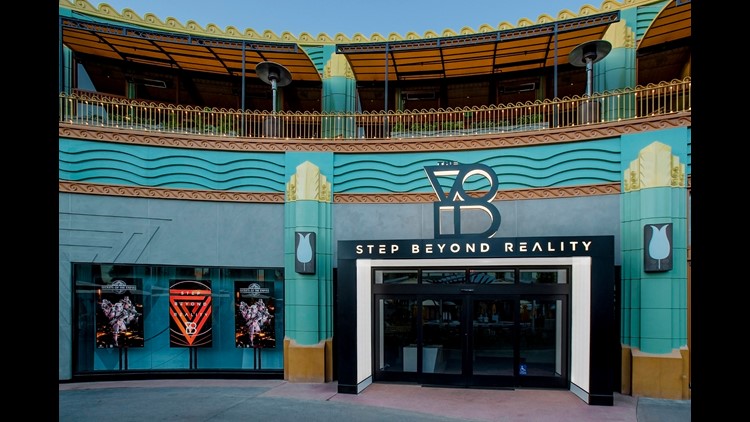 To borrow from another science fiction mainstay, the experience is not quite like entering a holodeck. But it does allow visitors to boldly go where no one has gone before — namely the magma-encrusted planet of Mustafar — in a largely convincing (if highly illogical) way. Yes, the gear is still clunky, and the imagery is a notch or two below Ultra HD. Users can’t help but be aware of the technology that makes the illusion possible, thereby compromising total immersion into the story. But VR trickery (at least The Void’s application of it) has accelerated to the point that transcendence, breaking down the barrier between virtual and reality, is tantalizingly close.
Among the elements that distinguishes “Secrets” from other VR attractions and works in its favor is that participants can see virtual renderings of their entire bodies, including their hands. Mine looked like human hands with arms outfitted in the white uniforms of stormtroopers. Also, I could see, as well as talk to and hear, the fully formed bodies of the digitally transformed guests who were joining me on the mission. As opposed to the disembodied and isolating aspects that plague some other VR presentations, “Secrets” is highly social.
It’s also multi-sensory. The smells of burning embers, the sensation of heat, the low rumble of vibrating floors, the rib-tickling sensations delivered by haptic vests, and other “4D” effects all help convince participants that their Mustafar mission is really happening. Surprisingly, the enhancements extend to the sense of touch. For example, K-2S0, an imposing, but friendly droid (who sounds suspiciously similar to Anthony Daniels, the actor who voices the gold-plated C-3PO), helps guide participants through the experience.
See the full story here: https://www.13wmaz.com/article/news/nation-now/star-wars-virtual-reality-at-the-void-in-disney-world-and-disneyland/465-21d6fff4-3b90-4266-afbf-579b7f541259
Disney Patent Previews More Star Wars AR Gaming
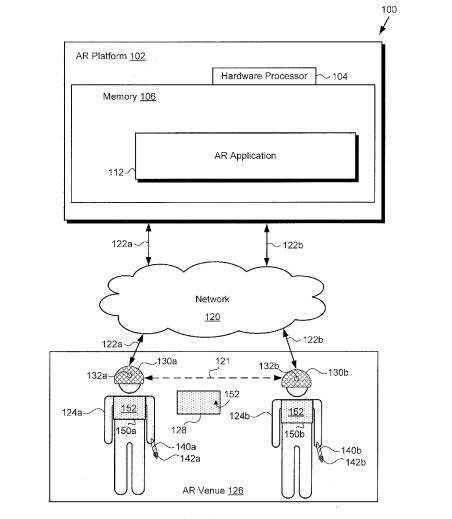 A newly-filed patent application from Disney Enterprises, Inc. teases more augmented reality lightsaber duels, either for at-home gaming or for the media behemoth's forthcoming Star Wars theme park.
The patent, titled "Augmented Reality Interactive Experience," describes a system that would involve a networked application running on computers and head-mounted displays that also connects to peripherals that transmit and detect infrared light, and an "AR venue" in which the experience would take place.
Players would carry swords or blasters equipped with IR emitters, with light-detecting cameras embedded into the headset or a wearable component that reflects light to determine position. The application would run the experience and keep score of IR hits. The patent also notes that one implementation of this patent could involve an inserted smartphone acting as the computer, display, and IR detector.
See the full story here: https://next.reality.news/news/disney-patent-previews-more-star-wars-ar-gaming-0184839/