Wells Fargo Puts Virtual-Reality Twist on Experiential Marketing
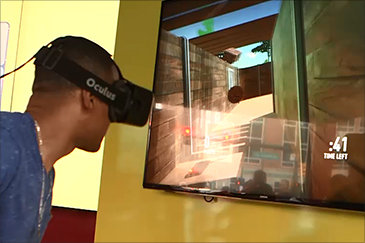 The initiative, which has consumers playing a virtual maze game and includes social media components, represents part of a trend of bank brands creating funkier – and techier – in-person experiences to get in front of consumers one on one, to strike up conversations in a new way, to secure new customers down the road and to have a stronger shot to get positive mentions on the internet.
Umpqua Bank, well known for its quirky marketing, paid for a traveling digital art show last year to spice up conversations with bankers, for instance. And BancVue has hit the road on behalf of community banks recently with what it calls the Kasasa Rewards Rush tour that its customers can rent and consumers can find where it's heading online.
For Wells, there are several eye-catching components to the so-called Together Experience tour. At each event – indoors or outdoors – the bank sets up a tent and sometimes an awning that includes a photo booth, Oculus Rift headsets and a WizDish ROVR locomotion platform that consumers stand on to play the virtual maze game where they need to collect as many gold coins as they can before time runs out. Some Wells Fargo branding is woven into the game, and of course, Wells Fargo brand ambassadors are nearby to help navigate participants through the maze game just as the bank hopes to help navigate consumers with their financial journeys, said Copeland.
"The primary purpose is branding and getting Wells Fargo out there in a new and different and fun way," said Copeland.
See the full story here: http://www.americanbanker.com/news/bank-technology/wells-fargo-puts-virtual-reality-twist-on-experiential-marketing-1076224-1.html
Oregon Entrepreneurs explain why virtual reality is part of a new technology revolution
Some people aren’t yet convinced that virtual reality is the next big thing. Others say it’s going to be a revolution.
Three Oregon-based entrepreneurs speaking on Thursday certainly fall into the latter camp.
360 Labs co-founder Thomas Hayden, ZeroTransformfounder Justin Moravetz, and WILD founder Gabe Paez spoke on a virtual reality panel at TechFestNW in Portland and each expressed optimism for the virtual reality industry.
he’s working with someone in Silicon Valley who is bringing virtual reality to the elderly.

“They are socially isolated and they don’t have access to talk to others,” he said. “But through VR, they are able to communicate and discuss all these things and relax and network again. There are so many amazing applications over the coming years — it will just be mind-boggling.”
See the full story here: http://www.geekwire.com/2015/entrepreneurs-explain-why-virtual-reality-is-part-of-a-new-technology-revolution/
Second Life creator Linden Lab starts testing its virtual-reality world: Project Sansar
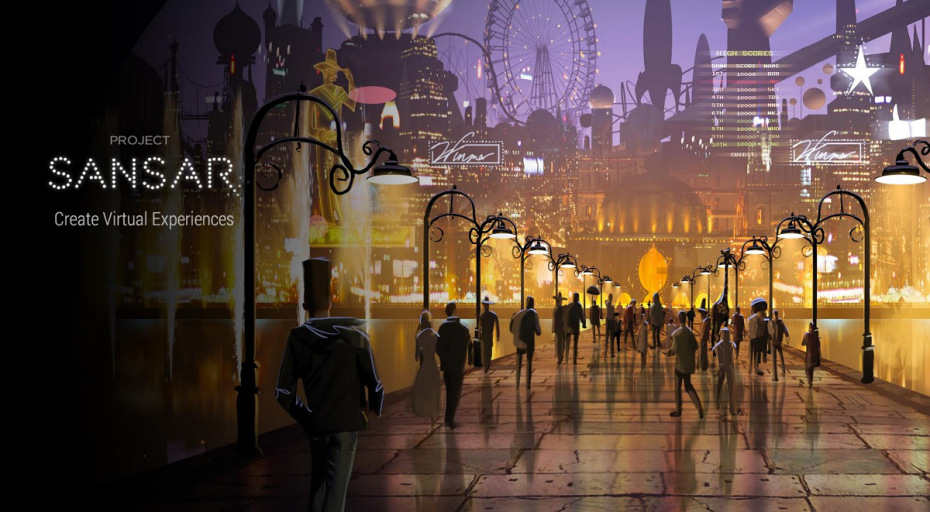 Second Life creator Linden Lab is announcing today that it has begun inviting creative people to test its new virtual reality world, code-named Project Sansar.
Project Sansar should debut to the general public in 2016, and its aim is to democratize virtual reality as a creative medium. The platform aims to empower people to easily create, share, and monetize their own multi-user, interactive virtual experiences, without requiring engineering resources.
Linden Lab said the platform will enable professional-level quality and performance with “exceptional visual fidelity, 3D audio, and physics simulation.”
Project Sansar will be optimized for VR headsets like the Oculus Rift, but also accessible via PCs and (at consumer launch) mobile devices.
Project Sansar will reportedly have exploration, socializing, and other experiences made possible through expressive avatars, using text, and voice chat. And it will make it easy and fun for users to create their own social VR experiences, eliminating the need to find a professional developer to build such an experience today.
“We want to lower the barrier of entry for VR experience creation,” said Linden Lab CEO Ebbe Altberg in a statement. “Project Sansar will do for virtual experiences what WordPress has done for the web: empower a broad range of people to create with professional quality and reach global audiences.
“By greatly expanding who can create virtual experiences, Project Sansar will also extend the value of VR to a wide variety of use-cases – from gaming and entertainment to education, architecture, art, community-building, business meetings, healthcare, conferences, training, and more.”
It’s going to be at least 5 years before virtual reality goes mainstream
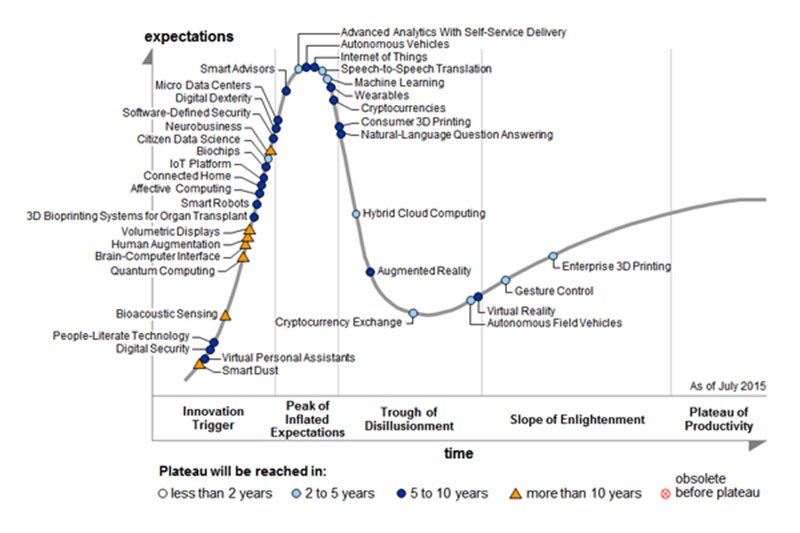
See virtual reality below, sliding up the "Slope of Enlightenment" between "Autonomous Field Vehicles" and "Gesture Control?" Don't let the analyst firm's term for where VR is at on the Hype Cycle throw you off — it's just Gartner's way of measuring where emerging technologies are in the zeitgeist.
In plain English, that means VR is close to the point where it's widely understood by the general public. But that doesn't necessarily make it a mainstream technology.
Read more: http://www.techinsider.io/virtual-reality-on-gartner-hype-cycle-2015-8#ixzz3jP2hrJwG
See the full story here: http://www.techinsider.io/virtual-reality-on-gartner-hype-cycle-2015-8
‘You vs. Sharapova’ Virtual Reality Experience To Hit 2015 US Open
 Adweek previewed the experience against the virtual Sharapova on Aug.17, calling it engrossing and enthralling, especially when trying to make contact against her 100-mph serve. Yeah, even on a virtual reality platform ... good luck with that.
The experience runs four minutes, using the HTC Vive, a device that streams virtual reality and is set to hit the market soon.
See the full story here: http://www.techtimes.com/articles/77962/20150819/vs-sharapova-virtual-reality-experience-hit-2015-u-s-open.htm
IU football building library of virtual reality plays
Kevin Wilson and Indiana’s two-person virtual reality staff have begun creating what Wilson called a “library” of plays. Thanks to the three-dimensional nature of virtual reality, Wilson, his staff and his players can study plays not just from different angles, but from the viewpoints of different players on the field.
“It really submerses you, like you’re in it,” Wilson said after practice Wednesday. “If the play’s moving, it’s kind of a lot going on. … What you want to do is freeze it and then look around and talk.”
Several college athletic departments, including IU and Michigan, have begun to incorporate virtual reality into daily work, whether it be training or recruiting.
Director Randal Kleiser Kicks Off Virtual Reality Narrative Short ‘Defrost’
 A technically-savvy director, Kleiser was excited to experiment with the format. In the story, told in the first-person, the viewer "plays" Joan Garrison, who awakens after being cryogenically frozen for 30 years. As the story begins, Joan's in a wheelchair, being led down a hospital hall as the doctor (Carl Weathers) explains to you what has happened, given you the sense of disorientation that “Joan” would feel. You then meet your family, and one by one they reintroduce themselves. It ends with the doctor asking if you’d like to see what you look like, and holds a mirror up to you (the camera) for the reveal.
“It’s a first person experience and you can make the viewer a character,” Kleiser told The Hollywood Reporter of his impression of the new medium. “I came up with the idea of the wheelchair ... as well as making her speech not possible due to the defrosting process. [This is because in VR] you couldn't talk to the characters, but they could talk to you."
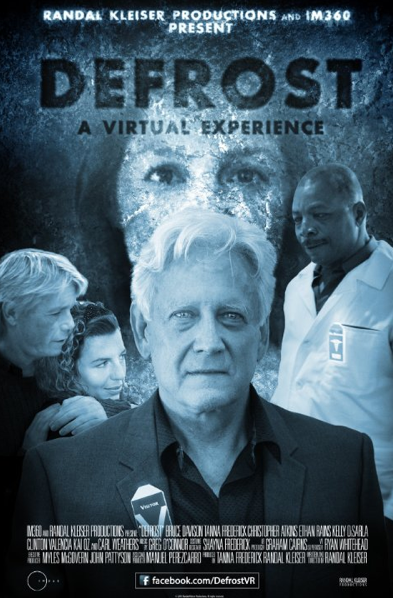 Defrost’s production company is VR firm IM360, a joint venture between VFX house Digital Domain and VR technology developer Immersive Media. IM360 also provided its 360-degree VR camera system for the production.
See the full story here: http://www.hollywoodreporter.com/behind-screen/director-randal-kleiser-kicks-virtual-816092
Google and Intel combine 3D technologies to demo the ultimate augmented reality smartphone
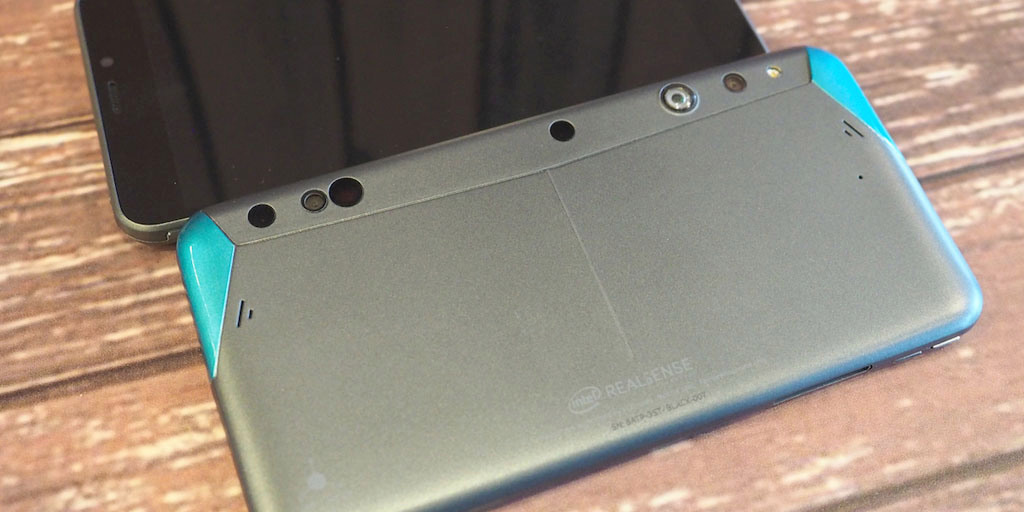 Google and Intel have developed what looks like the ultimate augmented reality smartphone, combining Google’s Project Tango tech to map and track 3D environments with Intel’s RealSense camera sensor, which isolates and scans 3D objects within those environments.
Engadget reports that the two companies have so far produced a developer prototype of the smartphone, with a consumer device expected to be released further down the line.
See the full story here: http://9to5google.com/2015/08/19/project-tango-with-intel-realsense/