PTC Explores the Use of Augmented Reality Technology for Autism
 A team of PTC employees volunteered countless hours to research and understand autism and the requirements for an effective AR solution. Once the team understood how to best develop applications for an autistic child, they quickly reached a project milestone by completing a prototype solution. In the next phase, an app, created for children with autism and a developmental age of three to five years old, will be clinically tested and evaluated for continued improvement. Dr. Shane will discuss the project in more detail for media and analysts in a session at the upcoming LiveWorx conference held in Boston on June 17-20th.
See the full story here: https://www.businesswire.com/news/home/20180424005921/en/PTC-Explores-Augmented-Reality-Technology-Autism
U2 Kicks Off Latest Tour with Augmented Reality App Experience
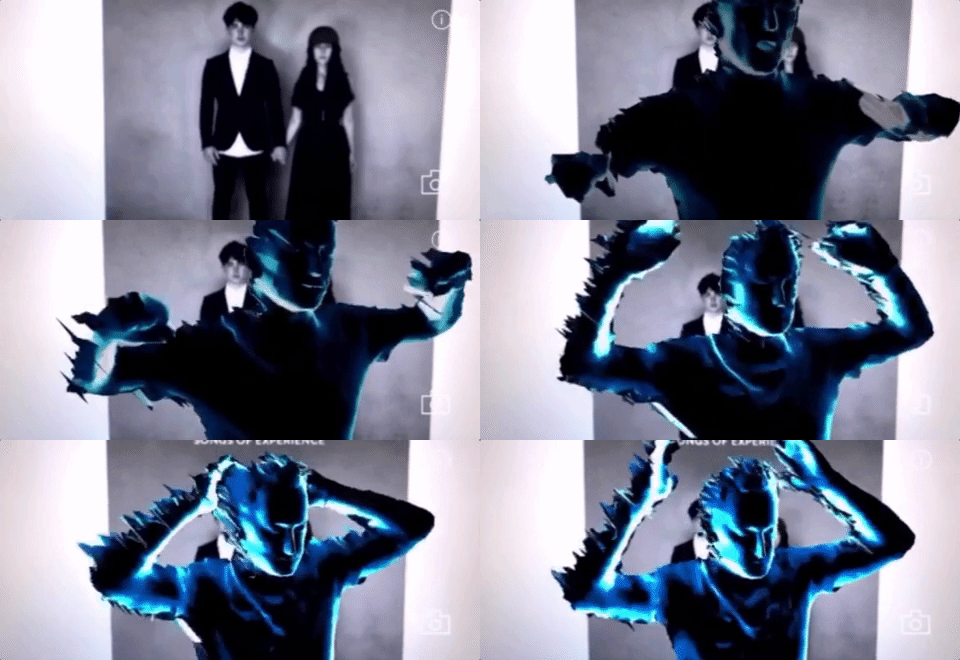 Once the app recognizes the album cover image, the image transforms into an AR object and then dissolves as it's replaced by a singing, virtual Bono (the lead singer of the group).
Oddly, although the app has a built-in function to allow you to save photos of the AR experience, the app doesn't allow you to record video of the AR animations (you can use screen record on your iOS device for that).
The band is also promising an additional live AR component that will be available to fans who bring the app to live U2 tour shows. Once fans get to the venue, they'll find a 100-foot-long LED wall with images that will serve as the triggers for a massive AR experience via their smartphones.
See the full story here: https://next.reality.news/news/u2-kicks-off-latest-tour-with-augmented-reality-app-experience-0184356/
The makers of the virtual influencer, Lil Miquela, snag real money from Silicon Valley
 The account “hack” was architected by brud as part of an ongoing virtual reality drama playing out on Instagram and other social media platforms between avatars it had developed, all designed to attract media attention, according to people with knowledge of brud and its plans. It worked.
One Los Angeles investor familiar with the company said brud was “using conflict to introduce new characters… same as the Kardashians always have.”
The investor added that two years into the development of the Miquela persona, brud‘s founders knew that the fad could lose some of its luster as the is-she-or-Isn’t-she-real tension dissipates under the weight of continuously thwarted expectations
In the High Snobiety profile-as-honors-senior-English-thesis on Lil Miquela published yesterday, the avatar’s own spokesperson was quoted as saying:
“The internet is endlessly powerful, and that power has been wielded in many ways. It feels like we’re not going to put the genie back in the bottle, so we’ve got to learn how to leverage these tools in positive ways. I’ve used my platform to raise real money for important organizations throughout LA and I’ve seen lives changed as a result. I think the only chance we’ve got is to collectively teach our loved ones how to think critically and how to spot misinformation. I know that we can manifest the change we want to see, and the internet can be a part of that.”
It’s a lofty goal backed by a number of inarguably good works. However, lying to reporters may not be the best way to continue trying to achieve it.
See the full story here: https://techcrunch.com/2018/04/23/the-makers-of-the-virtual-influencer-lil-miquela-snag-real-money-from-silicon-valley/
SingularityNet – The Global AI Network
 SingularityNET is the decentralized protocol for accessing a network of AI algorithms, services, and agents. Through the combination of open source principles, blockchain integration, and leveraging the leading minds in machine learning, we will make AI accessible as a global commons for all.
HTC Debuts New Vive Pro Virtual Reality Kit in Big Business Push
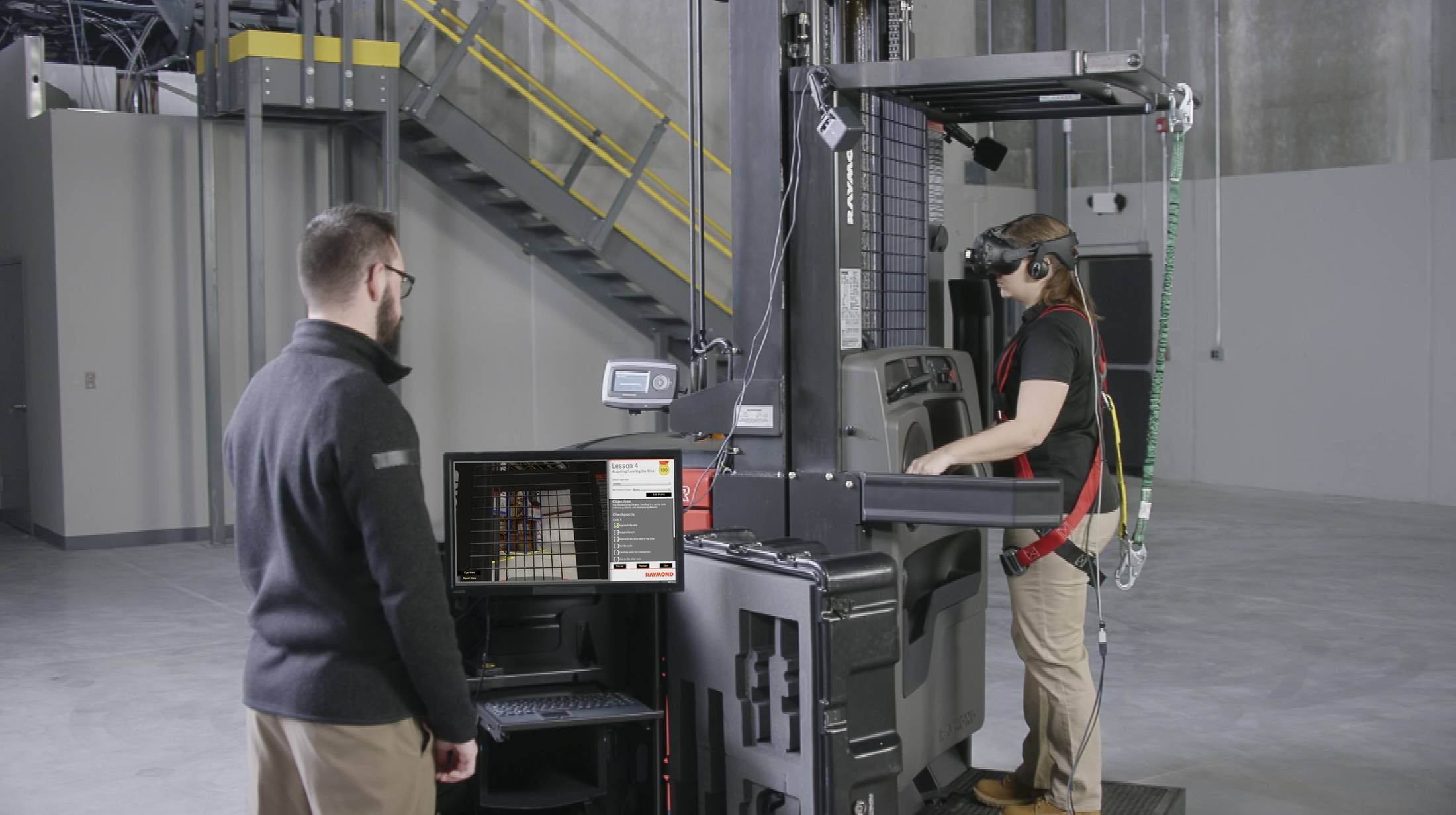 HTC’s new Vive Pro 2.0 Kit, which costs $1,399 and includes the new Vive Pro HMD VR headset, two revamped base stations for tracking movements, and two controllers. HTC released the Vive Pro VR headset, which costs $799, earlier in April. Companies will be able to buy the new Vive Pro 2.0 Kit, which costs $200 more than HTC’s previous VR bundle for businesses, as of Monday via HTC and other retailers.
Some recent examples of companies using VR technology include Farmer’s Insurance, which is using Facebook’s Oculus Rift headsets to train its claims adjusters and PG&E, which also uses the Rift headset to help train workers in inspecting electrical equipment.
The VR forklift tutorials also let people experience what it’s like to be hoisted 30 feet up in the air, which can happen when operators must place cargo in high-up locations, Field said.
“It’s a little unnerving if they aren’t good at heights,” Field said of the task. With VR, however, trainees can get more easily acclimated to the feeling of being high above the ground because it “really gives you the full sensation,” he said.
HTC is also selling newer versions of its enterprise service agreements, with the basic one starting at $199 that includes a two-year warranty. Another version that costs $299 includes the ability for companies to immediately receive replacement parts, like new controllers, without having to ship the broken ones back to HTC before they can be replaced, O’Brien said.
See the full story here: http://fortune.com/2018/04/23/htc-vive-pro-virtual-reality-business/
Poster – Believable virtual characters in mixed reality
 Abstract:
See the full story here: https://ieeexplore.ieee.org/abstract/document/8088462/figures
AUGMENTED REALITY IS TRANSFORMING MUSEUMS
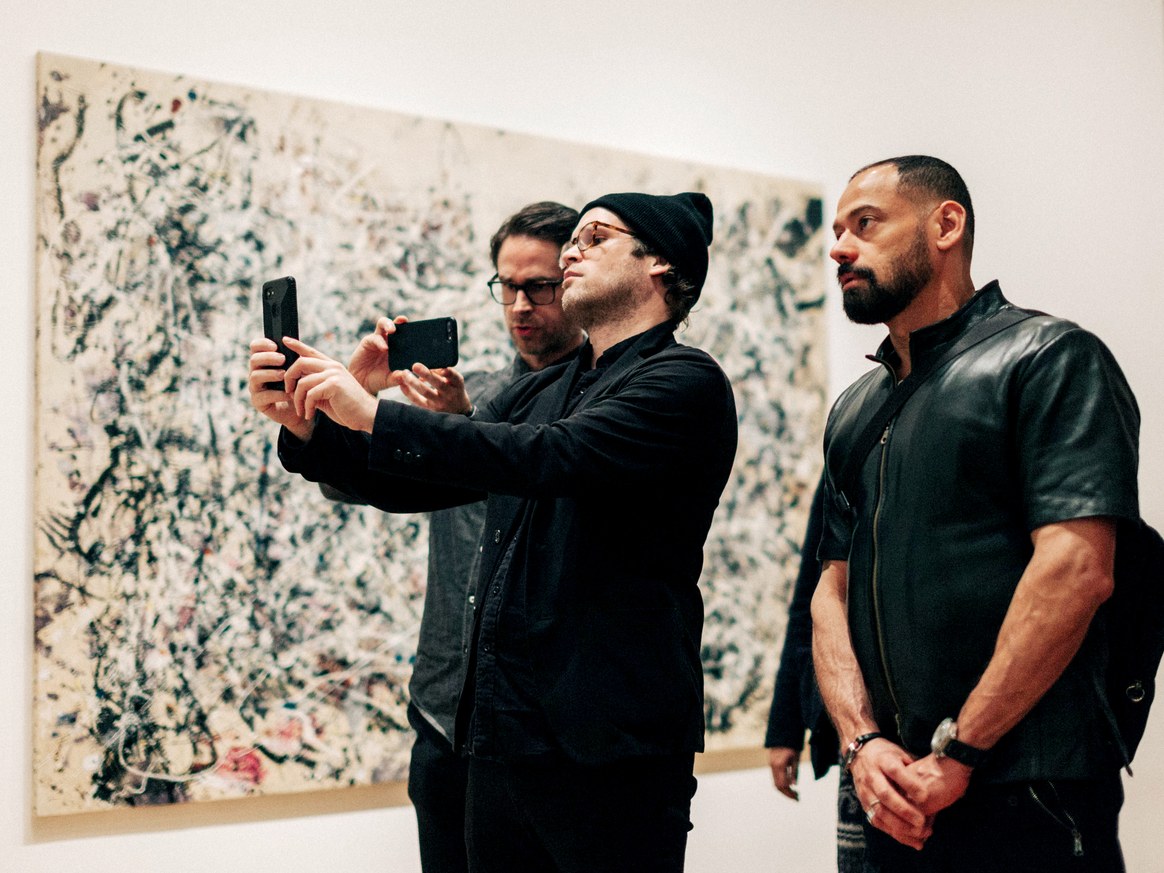 NEW YORK’S MUSEUM of Modern Art is under siege. Well, a virtual siege, at least. A group of renegade artists has co-opted the brightly-lit Jackson Pollock gallery on the museum’s fifth floor, turning it into their personal augmented reality playground.
To the uninitiated, the gallery remains unchanged; Pollock’s distinctive drip paintings are as prominent and pristine as ever. But to those that have downloaded the MoMAR Gallery app on their smartphones, the impressionist's iconic paintings are merely markers—points of reference telling the app where to display the guerilla artists’ works. Viewed through the app, Pollock’s paintings are either remixed beyond recognition or entirely replaced. One artist has framed a Pollock painting in an interactive illustration of a smartphone running Instagram, allowing viewers to “heart” the work over and over again. Another has overwritten Pollack’s imagery with an artistic interpretation of the many conspiracy theories peddled by Q, a mainstay of the far-right on 4chan. Together, the eight works form a virtual exhibition dubbed “Hello, we’re from the internet,” which uses AR to challenge MoMA’s gatekeepers and museum curators at large.
...Despite the current lack of of clear laws around what can and cannot be done to virtually augment art, museums aren’t entirely powerless. When visitors enter a museum, they agree to whatever rules that institution has set out—no photography, for instance, or no touching the paintings. Museums could begin to add “no AR apps” to their rules, or ban the use of phones outright—though doing so might seem like a step backwards, considering that many museums only recently began embracing smartphones as a way to engage their visitors. Artists, too, could begin negotiating more complex contracts with museums, spelling out what can and cannot be done to augment their works. The latter may become more common as museums follow in the Pérez Art Museum Miami’s footsteps, experimenting with their own AR exhibitions. “There are a lot of interesting IP questions we have to navigate,” says Christina Boomer Vazquez, deputy director of marketing and public engagement at PAMM. “There’s also the issue of respecting the artists that are on view and the impact that [augmentation] would have on that artist and that work. [Augmentation] can alter the whole context and conversation of that artist’s work.”
See the full story here: https://www.wired.com/story/augmented-reality-art-museums/
How the New LED Cinema Screen Could Change Filmmaking and Moviegoing
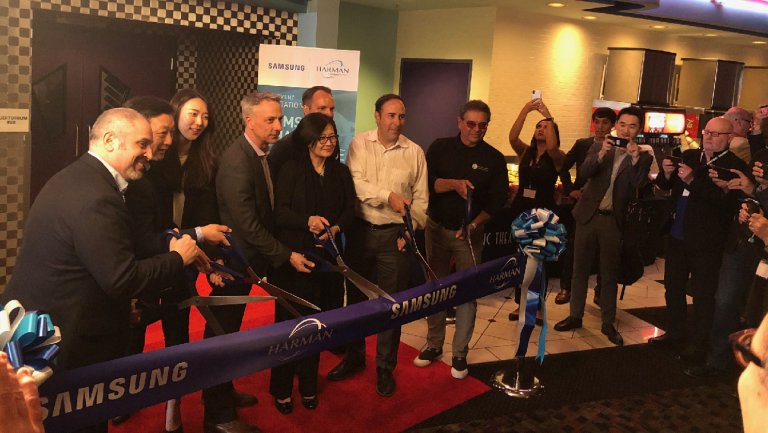 The first LED cinema screen in the U.S. was unveiled Friday at Pacific Theatres Winnetka in Chatsworth, California, a suburb of Los Angeles, where Warner Bros.’ Ready Player One will be the first movie offered on the new exhibition system, starting Saturday.
So far, the images that the screen produces have impressed many in Hollywood, including Jerome Dewhurst, senior color scientist at postproduction facility Roundabout Entertainment. He contends that the LED screen’s “pure black is much deeper" than other systems.
In order to prep movies for exhibition on the new LED screen in theaters, Samsung hopes to outfit postproduction facilities so that filmmakers can view their work on an LED display. The first color grading (digital intermediate) postproduction suite to offer a Samsung LED Screen in North America has now opened at Roundabout’s Santa Monica facility. It offers a 17-foot screen that can play 2K resolution, standard or high dynamic range, 7.1 surround sound and offers a Blackmagic DaVinci Resolve color grading system. Samsung hopes to add its screens in more post houses.
The new Samsung LED Cinema Screen in Chatsworth is 34 feet wide and 18 feet high, with all of the features of the smaller screen at Roundabout, but it can additionally support 4K resolution.
Ready Player One was screened on the Samsung system at 24 frames per second, the standard in cinema. But the tech manufacturer contends that it’s working to get the system up to a high frame rate of 60 frames per second.
Harman’s cinema solutions manager Dan Saenz explained that the new configuration places the front speaker directly above the screen and incorporates some filtering technology, designed to make it appear as though the sound was coming from the screen; and it places an additional speaker in front that bounces high frequency sounds off the screen and into the audience, also aimed at creating the sonic experience of a traditional theater.
Still, the biggest hurdle to a rollout could come down to the cost. Samsung said the cost of a screen could run anywhere from $500,000 to $800,000, a hefty price for a theater owner. Pete Lude, chief technology officer of engineering firm Mission Rock Digital, estimates that in comparison, top-of-the-line laser projectors generally cost between $150,000 to $300,000.
See the full story here: https://www.hollywoodreporter.com/behind-screen/how-new-led-cinema-screen-could-change-filmmaking-moviegoing-1104745
The problem with ICOs is that they’re called ICOs
 What do you think are the main misconceptions about ICOs?
The problem with ICOs is they want to ride two horses. The use of the word “coin” implies that the tokens being sold are money. The phrase “initial coin offering” is deliberately evocative of “initial public offering,” which is about a company selling shares to the public. They want to ride the Bitcoin horse by saying, “We’re not a security—it’s just money,” but they also want to ride the “You’re buying into a future enterprise that will be worth a lot of money” concept that’s inherent in the sale of shares. That’s one of the big tensions with ICOs, that lack of clarity, and that’s something that needs to be fixed.
... On the supplier side, if you see that you can write a white paper, put up a website, put up a Bitcoin address, and people will send you millions of dollars, that’s a very big temptation. You can essentially get the exit before you’ve built the product. ...
What would you rather call it?
When I think about how to apply this technology in the future to make a better system, I think about shares. The term IPO is perfectly fine for me. But IPOs are only for very big companies right now. The question is how to get the barrier to an IPO down much further. ... This is almost like going back to the past, of local exchanges and the buttonwood tree [where the New York Stock Exchange was formed]. That’s the sort of world I think we should be aiming for. The whole ICO craze at best is a catalyst; at worst it’s a really deliberately misleading concept and phrase.