Computer Programming Is a Trade; Let’s Act Like It
 The most intensive schools, like Seattle-based Code Fellows, are so sure they can get students work they will refund a student's tuition—$12,000 for 16 blitzkrieg weeks to get a person from zero to trained—if that person doesn't get a job.
Mr. Carson, co-founder of Treehouse, says his own computer-science degree, which he got in 2000, is useless. Technology now moves so quickly that programmers must constantly retrain in new frameworks. This provides an opening for students willing to learn exactly the skills that are hot right now as long as they're also willing to continue learning for life.
See the full story here: http://online.wsj.com/articles/computer-programming-is-a-trade-lets-act-like-it-1407109947
5 clever apps and games that leverage the 3D screen in Amazon’s Fire Phone Read more: http://www.digitaltrends.com/mobile/apps-games-using-amazons-fire-phone/#ixzz39MKpFlsU Follow us: @digitaltrends on Twitter | digitaltrendsftw on Facebook
 In reviews, one of the biggest knocks against the new Amazon Fire Phone is that it’s full of gimmicks. It has a handful of new features like 3D lockscreens (called “Dynamic Perspective“) and tilt-to-reveal capabilities that look neat, but for the Fire Phone to really ignite ordinary people’s interest, it will need a robust app store and exciting apps that take advantage of its unique features.
“The idea of angry tofu delights me,” he said before demonstrating the game. In it, players maneuver a character through levels while collecting blue orbs and avoiding obstacles along the way, with the goal of saving Fortune Kitty.
Tilting the phone gives players new views and perspectives of the level. Terry Haynes, a producer with HotGen, said working with Amazon Game Studios “graciously guided” them through the “often choppy waters of video game development,” giving them the chance to “shine as a studio.”
See the full story here: http://www.digitaltrends.com/mobile/apps-games-using-amazons-fire-phone/#!buF168
Nvidia Designs New Pixel-Dense LCD Panels for VR Headsets
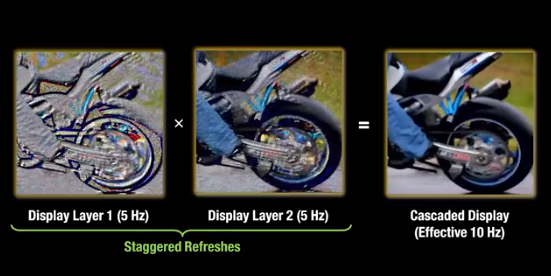 Researchers at Nvidia have found a trick that solves the problem of users being able to see the pixels in their VR headsets. By using a “cascaded display” involving two LCD panels, the researchers found that they could quadruple the pixel density of the headset, making pixels invisible to the eye even at close range. The cascaded displays also have a faster frame rate, making images appear smoother, and a reduced brightness, which is not a concern for the displays in VR headsets.
The cascaded display works by utilizing two LCD panels and the tiny shutters on the panels that control the visibility of each pixel. The shutters from one LCD panel are removed and placed over the shutters of another panel. The extra layer of shutters is installed in an offset position, effectively turning each pixel into four.
See the full post here: http://www.etcentric.org/nvidia-designs-new-pixel-dense-lcd-panels-for-vr-headsets/
and here: http://www.technologyreview.com/news/529201/lcd-hacking-trick-could-make-virtual-reality-more-real/
Now at RadioShack: Connect-Your-Stuff-to-the-Internet Kits
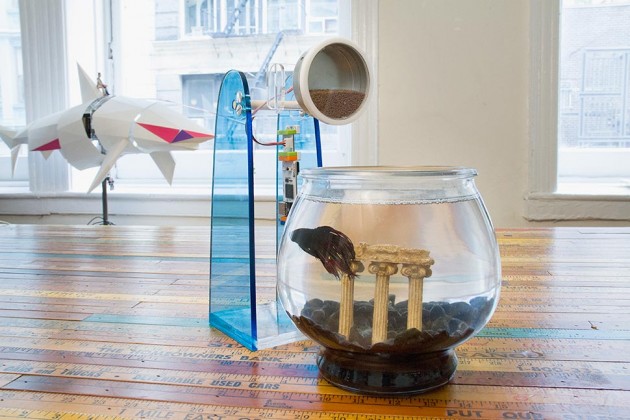 RadioShack (RSH) said this spring that it would attempt to shore up its crumbling retail empire by providing shelf space to crafty inventors whose gadgets might lure people into the stores. The first items will show up in stores next month, but they aren’t exactly gadgets; rather, they’re kits designed to help people make their ownInternet connected doorbells and toy houses with remote controlled lights.
The idea comes from New York startup LittleBits, which makes a series of brightly colored components that can be snapped together to create Rube Goldberg machines for the digital era. The company has already been selling sets that allow users to connect, say, a small sound detector to a LED light, allowing you to illuminate a small space every time you turn on the radio. Starting Wednesday, LittleBits is selling a kit that connects these things to the Internet. It will be available in a small number of RadioShack stores in August and in 2,000 of them by the fall.
The LittleBits pitch is simplicity. It says its electronics strive to be as easy to play with as Legos. A starter kit costs $99 and is designed to be useful in the hands of complete novices but also offers more advanced tools, such as APIs, for those who want to write code for the gadgets.
See the full story here: http://www.businessweek.com/articles/2014-07-23/diy-home-radio-shacks-connect-your-house-to-the-internet-kits
BSkyB Doubles Down on Virtual Reality Cinema Tech
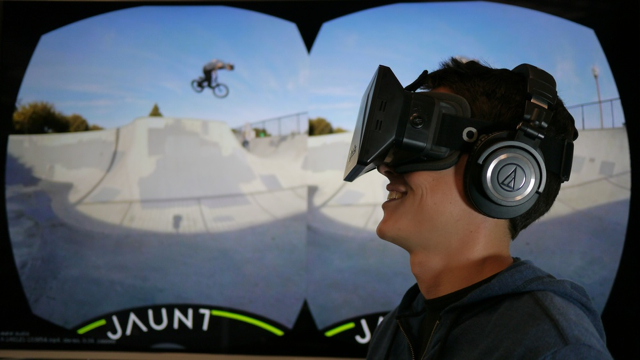 Fresh off its move to build “Sky Europe,” British Sky Broadcasting Group Monday said it has invested a further $400,000 into Jaunt, a one-year-old U.S. technology firm developing 360-degree virtual-reality cinema.
It follows a previous $350,000 equity investment made in December 2013 by BSkyB into Palo Alto-based Jaunt.
Jaunt says its technology offers broadcasters an “immersive virtual reality experience” through headsets rather than traditional flat television screens or devices. It uses the headsets made by Oculus VR Inc., which was acquired by social media U.S. technology giant Facebook in April.
The investments will “provide Sky with additional insight into developments within the field,” the company said in a statement.
See the full story here: http://blogs.wsj.com/digits/2014/07/28/bskyb-doubles-down-on-virtual-reality-cinema-tech-firm-jaunt/
Google (Opera) Glass Makes Debut in Puccini’s Turandot in Italy
 In what is being touted as a first, the opera house in Cagliari, the capital of the Italian island of Sardinia, will have some of its singers and musicians wear Google Glass Wednesday night when they perform Puccini’s Turandot, with the images from the digital devices sent in real time to the organization’s Facebookpage.
“It gives you a completely different view of something you’re familiar with and used to watching, like having a soccer player wear Google Glass during a game,” said Mauro Meli, the general manager of the Teatro Lirico di Cagliari, the Sardinian city’s opera house.
This is not the first digital initiative of the Cagliari opera house, which this year has boosted season tickets 40% and overall ticket sales by 57% in part by other moves aimed at getting the attention of the 20-35 crowd. The opera house is an active user of Facebook, Twitter , Google+ and Instagram, and the organization’s website site has the feel of a hip concert promoter rather than an opera house.
See the full story here: http://blogs.wsj.com/digits/2014/07/30/google-opera-glass-makes-debut-in-puccinis-turandot-in-italy/