Apple over the weekend released two new ads for the iPad Pro, one of which highlights augmented reality and another which focuses on what one can do with the Apple Pencil. Both ads are relatively short and arguably have an 80s themed vibe.
The first ad, which focuses on augmented reality, features a girl riding her bike across a city street whereupon she comes across an older man quietly reading a newspaper on a bench. She quickly takes out her iPad, and thanks to the power of iOS 11’s augmented reality features, she explores what the scene would look like if a couch was suddenly dropped nearby. Apple’s tagline for the ad reads: “With iPad Pro + iOS 11, you can use augmented reality to literally transform the world around you. Your next computer might not be a computer.”
To gain a better understanding on the benefits and flaws of VR and AR storytelling with international stories, I reached out to Asad J. Malik, founder and head developer of the AR project Asad and Assad, which explores the Muslim experience in America as an “Augmented Reality interactive documentary” project. As the viewer walks into a space, they will be able to “meet holograms of numerous human beings” talking about their experiences with Muslim identity.
I started focusing on and realizing the whole concept of holograms, where removing barriers might keep two people from being separate or distant. I started focusing on bringing images from two distant parts of the world, to juxtapose two realities. I did a project called Holograms from Syria, and displayed them in places in the US, and the impact for people to see those images.
There a lot challenges. One of the challenges is that the best practices aren’t established yet.
For now, though, the team recommends using the Mute/Block feature on those spewing offensive language or using the Mute All toggle to silence everyone but those on your friends list. You can report users with the Moderation Report Form, too.
Apex Construct takes one of VR’s more tried and true mechanics — firing a bow and arrow — and builds an entire game around it. This isn’t a shooting gallery in which you scale leaderboards, but instead a full world that you’re going to traverse over several diverse levels with an engaging story to uncover as you go. While it might not match the AAA production values of, say, a Battlefield game (a series which members of Fast Travel have worked on), there’s a tangible sense that you’re playing something by people who understand what makes a great single-player campaign.
Apex Construct’s world is infested with robotic creepy crawlies, initially resembling giant spiders but later morphing into other forms like exploding dogs. They pose a significant threat, firing energy blasts that will take you down in just a few hits, and you’ll need to master your archery skills in order to dispatch them as quickly as possible.
Combat, then, is one of Apex Construct’s defining features, and it feels refined, energetic and, most importantly, very cool.
When you’re not battling baddies, though, Apex Construct still has plenty to offer. Its world, for example, is a joy to explore in VR, with scenes that will make you stop and marvel.
Finally, as the icing on the cake, Apex Construct isn’t strictly a linear game. While levels do have a pre-defined path, you’ll find branching junctions that reward you with more experience and story hints.
One of the more interesting features in AR is the use of portals. By placing portals in the world, users can teleport to new places using 360 photos, 360 videos or 3D worlds.
Travel apps can add AR Portals as a feature to help users experience their desired destination. From viewing hotel rooms and patio views to previewing an adventure tour, mixed reality can provide the customer with an experience rich enough to validate making the purchase.
AR represents a new opportunity for companies and developers to engage their customers with new features. As more customers upgrade to ARKit enabled devices like iPhone 8 and X and ARCore comes to Android, the number of AR users grow exponentially.
The sensors can also be used in office buildings to reduce energy costs and in nursing homes to determine when someone falls. But retailers make up the majority of Scanalytics' customers, highlighting one of several efforts brick-and-mortar stores are undertaking to better understand consumer habits and catch up with e-commerce giant Amazon.
Physical stores have been at a disadvantage because they "don't have that granular level of understanding as to where users are entering, what they're doing, what shelves are not doing well, which aisles are not being visited," said Brian Sathianathan, co-founder of Iterate Studio, a small Denver-based company that helps businesses find and test technologies from startups worldwide.
Sunglass Hut and fragrance maker Jo Malone use laser and motion sensors to tell when a product is picked up but not bought, and make recommendations for similar items on an interactive display. Companies such as Toronto-based Vendlytics and San Francisco-based Prism use artificial intelligence with video cameras to analyze body motions. That can allow stores to deliver customized coupons to shoppers in real time on a digital shelf or on their cellphones, said Jon Nordmark, CEO of Iterate Studio.
...the sensors read a customer's unique foot compressions to track that person's path to a digital display and how long the person stand in front of it before walking away, he said. Based on data collected over time, the floor sensors can tell a retailer the best time to offer a coupon or change the display before the customer loses interest.
The cost of having the sensors ranges from $20 to $1,000 per month, depending on square footage and add-on applications to analyze data or interact with digital signs, Scanlin said. He said he's working with 150 customers in the U.S. and other countries and estimates that about 60 percent are retailers.
The toothbrush also allows parents to monitor their children's brushing habits. They'll see how many times a day their kids are brushing, how fast, and for how long.
Blockchain technologies could also prove a potent solution to drastically reduce piracy by certifying ownership, identity, and licensing agreements. An Austrialian company, Veredictum, is building a platform that proposes to do just that.
Veredictum claims the ambitious goal of reducing “film and video piracy by 80 percent within 10 years.” Their Ventana tokens are ERC-20 compatible tokens distributed on the Ethereum blockchain via a smart contract. They are currently in the token sale process.
One company looking to leverage this model to disrupt the video industry is VideoCoin (CEO Halsey Minor pictured below). VideoCoin is deploying a decentralized video encoding, storage and content distribution network to enable video streaming. Built on a distributed storage system, it incentivizes users to make their compute resources available for encoding chunks of video that can be stitched together to minimize lag and maximize video quality.
By adding VR to the menu, these restaurants are able to charge incredibly high bills not only for the food but also the experience. Like Sublimotion, which opened its doors 2014 in Spain, and is considered one of the most expensive in the world at about $2,000 a plate.
At Sublimotion, VR is used to elevate the gastronomy and the performance element of the food and the dining experience. The experiences and menu change, but guests wear a headset to watch their food fly in and they can even see the nutritional information about their meal in real time.
At Mad Rex in Philadelphia, instead of VR helping to make the food fly, it helps to allow the visitors to fly — or to feel like they are flying.
The restaurant is themed to be post-apocalyptic like the movie and comic Mad Max.
VREI and other VR cafes are popping up all around as a space to meet friends for a coffee and play VR games.
In Las Vegas this week, Samsung is showcasing its first MicroLED consumer television. Dubbed “The Wall,” the 146-inch, bezel-less, 4K TV is modular, offering consumers the ability to customize its size and shape by adding or removing sections without affecting image quality. MicroLED’s self-emitting tech uses millions of micro-sized chips that individually emit light, which eliminates the need for color filters or backlighting. If one day affordable, this tech could replace LED for consumer TVs and lead to wallpaper screens. The Wall by Samsung is expected to be available later this year, although pricing has yet to be announced.
“On a wall screen, you can watch TV, designating any section or portion of the display to act like a TV,” McQuivey noted. “But the rest of the wall can continue to display other things: family memories, simulated decor, or the avatars of family members watching remotely.”
OLED does not require backlight, one of the primary reasons its blacks and overall picture quality look so impressive. MicroLED aims to take this quality to the next level.
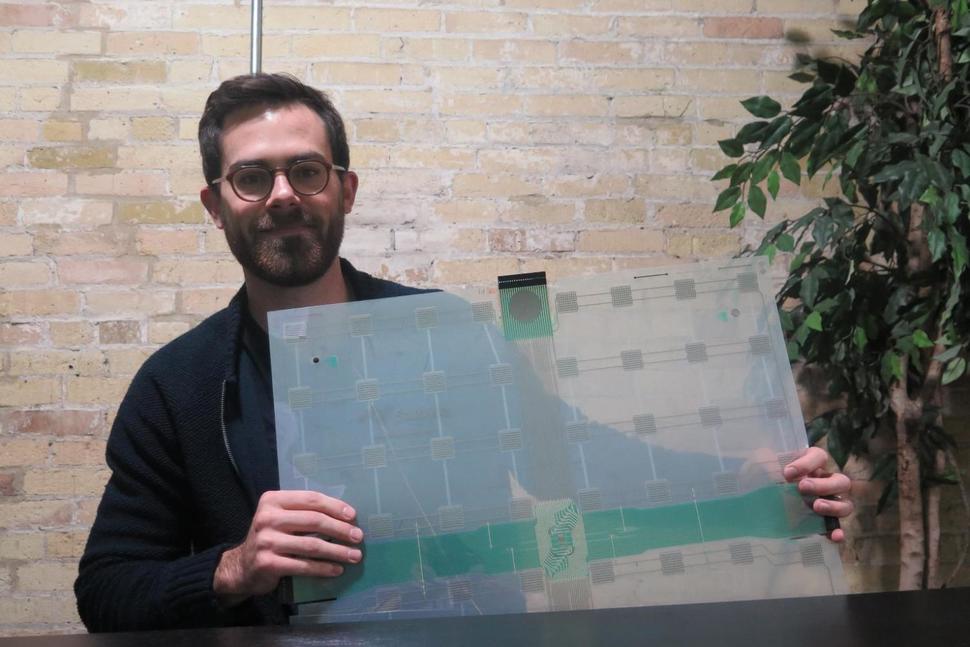 The sensors can also be used in office buildings to reduce energy costs and in nursing homes to determine when someone falls. But retailers make up the majority of Scanalytics' customers, highlighting one of several efforts brick-and-mortar stores are undertaking to better understand consumer habits and catch up with e-commerce giant Amazon.
 For now, though, the team recommends using the Mute/Block feature on those spewing offensive language or using the Mute All toggle to silence everyone but those on your friends list. You can report users with the Moderation Report Form, too.
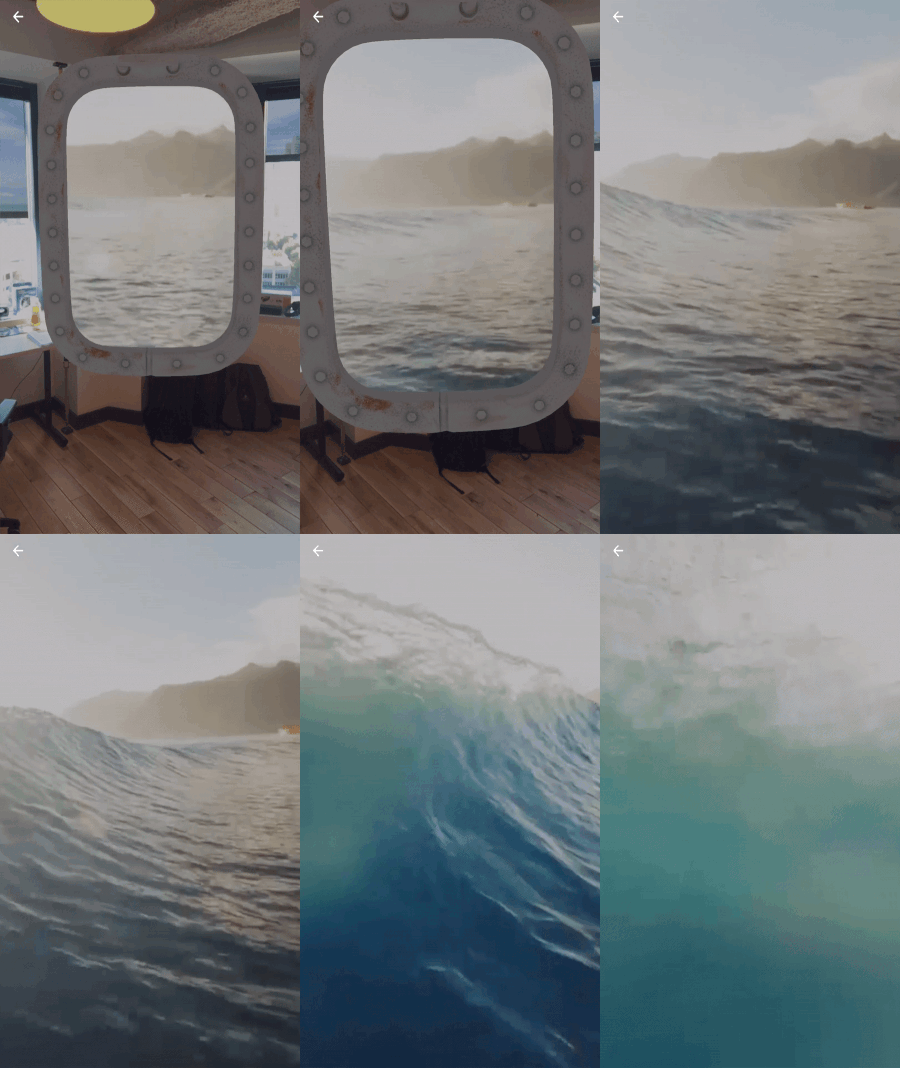 One of the more interesting features in AR is the use of portals. By placing portals in the world, users can teleport to new places using 360 photos, 360 videos or 3D worlds.
 Blockchain technologies could also prove a potent solution to drastically reduce piracy by certifying ownership, identity, and licensing agreements. An Austrialian company, Veredictum, is building a platform that proposes to do just that.
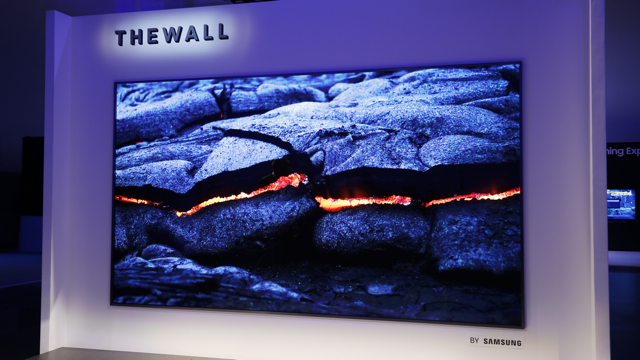 In Las Vegas this week, Samsung is showcasing its first MicroLED consumer television. Dubbed “The Wall,” the 146-inch, bezel-less, 4K TV is modular, offering consumers the ability to customize its size and shape by adding or removing sections without affecting image quality. MicroLED’s self-emitting tech uses millions of micro-sized chips that individually emit light, which eliminates the need for color filters or backlighting. If one day affordable, this tech could replace LED for consumer TVs and lead to wallpaper screens. The Wall by Samsung is expected to be available later this year, although pricing has yet to be announced.